About Me

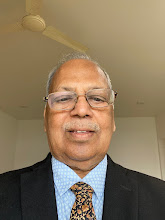
My photo
Dr. T. V. Rao is currently Chairman, TVRLS. A former professor and Board member at IIMA, Dr. Rao is the Founder President of National HRD Network and has been in the forefront of HRD movement in the country. Dr. Rao worked as a short-term consultant to UNESCO, Bangkok; USAID Indonesia; UNIDO Malaysia; and Commonwealth Secretariat, London and as HRD Consultant in India to over a hundred organizations in the public and private sectors. Dr. Rao received many awards including Ravi Matthai Fellow (AIMS), Asia Pacific HR Professional of the year 2019 (APFHRM) and Lifetime Achievement Award from Indian Academy of Management. Authored over 60 books.
Showing posts with label Udai Pareek. Show all posts

Sunday, December 7, 2014

Greed and OD

Greed and OD: Redefining the Values of Organization Development
T. V. Rao
Key note address to be delivered at the NATIONAL SEMINAR
On
“ORGANIZATION DEVELOPMENT (OD) & OD INTERVENTIONS: CHALLENGES & OPPORTUNITIES”
Organized By
THE DEPARTMENT OF PSYCHOLOGY
FACULTY OF EDUCATION & PSYCHOLOGY
 THE M.S. UNIVERSITY OF BARODA

Why do OD efforts in India do not give any visible results? Why is it after so many years of OD work neither OD interventions nor OD specialists seem to be widely acknowledged? Does OD result in any thing substantial or does it lead to anything at all apart from occupying the time and lives of a few people? Has it become a “time pass” activity when there is nothing else to do? These are some of the questions that are bothering me. These have bothered me for long and have begun to bother me more  as I see that sixty three years after independence and sixty years after the Indian republic was formed we seem to be nowhere near Nation building.
Divisiveness continues. It spreads from caste and religion based divisiveness, to political divisiveness to linguistic, regional, colour, education, health, batch, sector, section, department etc everywhere. Some divisiveness for improving the disadvantaged is fine but divisiveness leading to self destruction of a large part including that of the Nation is not acceptable.
We seem to live today in a scam driven world. Every day morning you wake up to hear what new scam has been unearthed. Starting with Satyam in the corporate world to CWG, 2G, Adarsh Housing, Mining and Land grab to everywhere. The nation’s time is taken away for protesting MPS,  MLAs and various other agents who should be spending their time in Nation Building.
Are the Indian corporations saved from this?  Has OD brought in certain amount of integrative outlook in our corporations?  In a world where organizations are built and developed to  sell than to build more, has OD done some good?  Organizations built by the sweat capital of many people suddenly get sold and the employees discover that they belong to a new management and a new organization that they have not heard before and they need to learn a new culture. . This has become the world order and Iida is no exception. Sometimes it appears that we are truly in the business of business and not that of service. In the past organizations used to be set up to serve others and in the process make some money to sustain themselves and grow. Today it appears that some organizations are being set up to make money and money alone. Even hospitals performance is being measured by the numbers in monetary measures  rather than patients served and benefits to society.  Government performance is also being measured by the numbers of schools and hospitals set up rather than what they are doing after they are set up.  
In other words short term orientation emerging out of greed has become the order of the day. The concept of service to society and working for larger cause is being forgotten except occasional when we talk of corporate social responsibility. Even this CSR gets reduced to projects to take care of the neighbourhood rather than getting integrated into everything that w e do in our corporations.
What are the implications of all this to OD today? Should OD change its course? I have chosen to present a few extracts on this occasion from our forthcoming book on “ Organization Development: Accelerating learning and Transformation” edited by Prof. S. Ramnaraayn of ISB and T. V Rao to be published by Sage response books this year. As a part of this book which contains about 37 chapters on various issues, my colleague Prof. Ramnarayan interviewed a few OD practitioners in India. I take this opportunity to present some extracts from these interviews and my own views and experiences of OD.    These experincecs indicate that OD is a lot more successful than what it has been widely known. However it has not reached all the sections and sectors it ahs to reach. We have a long way to go and perhaps we need to revisit and redefine its values or at least add to the list a core value of “Extension”.
Extracts from Interviews With Prof. S Ramnaraayn from the forthcoming book on OD (Ramnarayan and Rao, 2011)
Santrupt Misra on OD in Birla Group in an interview to Prof. Ramnarayan:
“Some of the interventions were extremely powerful for the organization. Every intervention communicated multiple messages to the organization.  For instance, the Chairman and the top managers started participating in the 360 degree feedback. It was an intervention that changed the cultural norm – the junior could also provide feedback to the senior. It created a sense of trust and transparency. It has prepared the top management of organization to receive and discuss feedback openly by sitting together. That was a powerful intervention.
There were interventions at the lower levels of the organization. High quality personnel were hired from leading management and engineering schools. They were paid competitive compensation in tune with the market rates. This was an intervention which communicated the importance of merit / competence to attract the younger generation with new skills like IT. It changed the paradigm of competence that the organization required. That was another powerful one.
We carried out an organization health study which was an important intervention. The feedback on how people perceived the organization was shared with the employees. Then, certain questions such as: “Do you want to do something? Do you want change? How do you change? What can you as an individual do to contribute to this change? What can organization do?” were posed to the employees.
Similarly, several team building exercises were introduced across functions to support structural changes as we moved from functional to SBU structure and also created global structures.
In doing all of these interventions, we used various resources and range of expertise from Indian, international, firms, individuals, teams, and so on. A number of consultants helped us carry out those interventions.
The emphasis was on churning the organization and creating new ideas and frameworks, and holding mirrors to help critical questioning and introspection, say through 360 degree feedback, survey feedback and numerous such approaches.
Are there some OD concepts that have outlived the utility?
The whole concept of the team needs to be revisited because today you have virtual teams. You have quick-set teams that come together for a purpose and break apart. They are not working together as teams over a longer period of time. So, the stability of team concept has changed. The entire issues around team interventions need to be revisited.

Extracts the Interview with Yogi Shriram of L&T
How do you think we should create and nurture OD practitioners?
It is important to think about this issue particularly when there are no formal courses. There are disparate small courses and certification, but I believe OD practitioners should be accredited by an institution. This should be based on practice and theory. It should be based on an actual OD change that the person has done in one or two years or even shorter duration in an organization and not on a project. The work should be examined and recognized by a set of practitioners. I would feel that the interns should be technically very sound and understand the literature. They may focus on one or two narrow areas of specialization, say appreciative inquiry, process consultation or coaching. I think it is very important to start a comprehensive OD course led by very senior people with a set of ethics with possibly collaboration with a reputed school abroad with a strong track record in OD.
The other key issue is that HR practitioners are scant in the leadership positions. Most HR practitioners are uncomfortable in discussing the business part and the conceptual part. Just as we need equal emphasis on both academic rigor and practice, we need equal attention to business issues and people issues.
P. M. Kumar of GMR on his experiences of OD and recommendations for future:
What would be your advice for learning and development professionals and young professionals getting to change and OD?
Have good networks, be resourceful to be able to connect with the right people and bring the most value based people in to work. 
Most importantly, you have to constantly ask yourself, is there any self interest that you are doing this in. Once the answer is ‘yes’ drop it like a hot potato. If you are ready as a practitioner, if it is in collective interest, then go. That’s my call. Timing and governance have to be made by every practitioner.  Fortunately, we have people across. And also, one more thing helped me right through my career. I have been versatile. I did process work, lab work, systemic job evaluation work, strategy and HR work, industrial relations, unions, settlement, and facilitation. Fortunately, when I look back, this has been an excellent exposure. I believe versatility is important for trust worthiness. Otherwise, you say that I have one hammer and everything looks like a nail. There are practitioners today for whom there is one answer for everything. They will not be accepted. They will only play a very marginal role. You need versatility, openness and see a wide range of possibilities.
Warner Burke in conversation with John R. Schermerhorn Jr. ( see Ramnarayan and Rao, 2011)
Are there certain competencies that all OD specialists should have?
Too much specialization in OD can be unproductive. An OD consultant must be a generalist. If a high degree of specialization is needed for a certain change effort then the OD consultant brings in this specialist for the job. For example, OD consultants are typically not compensation specialists but on occasion such expertise is needed. This need is only an occasional one and not in general. In other words, an OD consultant does not need to be a specialist in compensation even though changing some aspect of the reward system is often required for an overall successful change effort. I have suggested a set of competencies (see Table 2) that all OD specialists should have (Burke, 1994) which include such abilities as tolerance for ambiguity, ability to confront difficult issues, self awareness, and abilities to conceptualize and teach.
What are the most important cross-cultural issues and considerations for those interested in global applications of OD, say in India?
I have some but limited experience with the culture of India. I first was there in 1972 when I spent part of the summer as a visiting professor with the Indian Institute of Management, and traveled around much of the country. Change in India today is occurring at an unprecedented rate, and OD can be very helpful with the process, that is, helping organizations to plan, change instead of change merely happening to them. Indians have been interested in and practising OD well before 1972 when I was there, and my presentations then were well received. So, there is much history, and I do not see major cross-cultural issues with the US way of practicing OD in India. It has always been my understanding that OD practitioners in India respect theory and research, and work to apply behavioural science knowledge. The differences cross-culturally are there for sure, but not that easy to see immediately (after all, Indians speak English very well). We, Americans, must be diligent, however, about understanding subtle yet real differences, for example, how the dynamics of power and politics are manifested.
Dr. S. Chandrasekhar of IBM to Ramnarayan
Based on your OD experiences – those that have worked well or not so well – what are a few key lessons for OD practitioners?
Leaders cannot “outsource” change related work to some OD consultant - external or internal. It won’t work. They have to lead change personally .Too much jargon and conceptual models alienate people. Initiatives started well and not sustained create huge credibility gap. It is not very useful to use workshops and people assessments to “fix’ the trouble makers.  The business case for the change being sought needs to be very strong and explained very transparently. Else people will not be with you.

In an era of Global Competitiveness, Mega Projects, Community pressures, and Mergers & Acquisitions, what role do you think OD will play?
OD will continue to play a critical role in delivering change. Understanding competitors and doing things better than them needs deep organizational change. Executing Mega projects needs building alignment, rapid learning and capability building. Most times, OD has been relatively inwardly focused on the internal organization.  Dealing with communities, harnessing the eco-system around the organization and taking the OD plans into the larger community are important next steps. In M&A situation, OD programs must enable the combined entities to benefit by the synergies of the two organizations and not let one ‘dominate’ over the other.
What advice would you give to budding OD Practitioners? What are the key Do's and Don'ts?
Be passionate about OD. It is essentially an inter-disciplinary subject. So learn eclectically across sciences and arts. Learn to link your OD interventions with predictable and desirable business outcomes. Measure to improve. Avoid jargon. Communicate authentically. Enlist others and enroll support. Stay humble and maintain low profile. Work across generations and leverage diversity. We cannot be world-class if we always have an excuse, ‘oh this won’t work in India’. Be truly global and bring best practices from all over the world.
T. V. Rao’s views and comments (unedited from Ramnarayan and Rao, 2011)
Q: What do you conclude from Various OD in this part of the world?

TVR: OD as a planned change with long term involvement of OD facilitator has become a trend of the past. There have been many success experiences of the past. For example Dr. Udai Pareek, Dr. Abad Ahmed, Somnath Chattopadhyay, Dharni Sinha, Ishwar Dayal and Suresh Srivastava and such NTL trained OD facilitators worked with Organizations like the L7T, LIC, Medical Mission Sisters, ICI, State Bank of India etc. now a days you rarely find this work perhaps organizations like Tata Chemicals is an exception. As Dr. Santrupt Misra mentioned today OD has come to be short-term, quick and multiple intervention based. Specialization has gone up. So a variety of consultants are used. Some of assessment centers, other for 360 a few for executive coaching and the like. With enhancement of tendering process in PSUs, Component tendering process in PSUs, Component tendering has gone up rather than integrated development and planned and guided change. These have been successful with short-term gains. While they may cumulatively do some good for the organization, and integrated approach is still welcome. I have a feeling corporation like GE still continue to have long term engagement of the OD consultants.

Q: What do you consider as some of the success experiences in your own OD work?

TVR: The HRD work we had done both at L&T and State Bank of India is a success experience during that period. Recent work with Steel Authority of India and Bharat Electronics and Aditya Birla Group on Leadership Development using 360 Degree Feedback based interventions are another two examples of successful OD.

Everything is time bound. What is successful today may lay foundation for tomorrow. Once it is done the corporation grows and may not even remember that someone laid the foundation. For example strong foundations were laid in SBI through its training system in initial years. Later Udai and I worked for integrated HRD between 1975 and 1985. There was a sustained effort and hard work. It was successful. However it has gone to the background due to intensive dialogues with officers associations, change of leadership both at top level and in HRD. I re-entered along with Prof. S K Chakravarthy in mid nineties for specific task of a subsystem change. It was not continued beyond 5 years due to change of leadership both at the SBI top level and at Government level the Secretaries handling banking. They brought in new experts who did not have a clue of the history. For them it became a year to year event than planned change.

This is not to say short-term OD interventions don’t work. The HRD audit as a self-renewal mechanism, the 360 Degree Feedback as a change promoting intervention and Assessment Centers has worked well. As mentioned by Santrupt we were involved almost for a 5 year period with 360 DF in Birla Group. It was a great success as are of the inputs. In BEL we are involved in Leadership Development over the last seven years. A lot of change is taking place. A review of the work indicated both short and long term changes. For example short term it resulted in vision formulation, new product innovations and problems solving. Long term is resulted in increased openness and transparency.

A two day self-renewal workshop in XIM resulted in increased focus on Vision and deciding future course of action besides faculty involvement. A diagnostic study followed by a one day feedback workshop presenting the findings resulted in consolidation and increased focus on future strategies. So was the case of survey feedback in Bharat Petroleum, Cochin Refineries and the like. In Bharat Petroleum it was used to consolidate the gains of restructuring. After restructuring was done an employee satisfaction survey was conducted. The feedback communicated to employee revalidated the gains of restructuring and pointed the gaps in HR policies and helped BPCL to initiate new HR activities. Gati is a great example of sustained work coming out of top management commitment. There 360 DF has become of regular part of self renewal. Again a quick diagnosis of the Institutional concerns and a presentation to the entire team of the findings and with Aga Khan Foundation has become a stepping stone for consolidating gains and taking the Foundation in the direction its Founders have envisaged under the leadership of Dr Abad Ahmad is a success story of how short term interventions can lay foundation to facilitate the change process.

Q: What are some of the challenges OD and OD practitioners face today?


TVR: Execution is the major issue. Organizations seem to be highly short term result driven. They profess culture and values as important dimensions but focus extraordinarily on results and short term targets. This creates enormous difficulty for OD practitioners who like to work on long term and sustainable change.

Second mergers and acquisitions have become very common. In one company the executives told me that four years ago they belonged to a different company, two years ago to a different company and since the last six months he is working for a different company. In a four year period his organization has gone through three changes. While this may be a little uncommon most organizations live with certain amount of uncertainty. Ironically when mergers and acquisitions take place that is the best time for process work as it calls for adjustments and cultural change. Under uncertainties sustained focus on values, culture and long term thinking becomes difficult. OD becomes a short term quick fix problem solving exercise than a planned change for long term.

Appreciation for behavioral science based interventions and behavioral scientists ahs not in any way gone up while appreciation for specific techniques and technologies has gone up. For example the top management seems to appreciate the use of assessment cents for a specific group of people and at a given point of time. For example when they need to develop a group of high fliers or when they find shortage of tenant rather than making it a continuous process to upgrade talent or as a talent development tool. Same way survey feedback or 360 degree feedback, or outbound training becomes a onetime exercise to bring in process sensitivity than a continuous effort.

On the positive side many technologies are being sued. The OD filed has expanded to include a variety of techniques and methods.

HRD and OD have come face to face. Two decades ago there used to be issues like whether OD is part of HRD or HRD is a part of OD. Today the content is not so much as what it is part of what but more on which technology or intervention works better and under what circumstances. Some organizations are using LSIP technologies and others role based interventions and while some others use Assessment centers and 360 Degree feedback and a few others HRD audit, survey feedback and vision mission exercises etc. What is being undertaken is a technology based OD rather than a change oriented value driven process sensitive OD.

OD specialists as class is on the decline and specialization has gone up so much like in medicine rather than general practitioners today e see Executive Coaches, Assessment Center experts, survey feedback experts and performance management specialists. Sub system specialization has gone up.

Training focus remained and continues to remain the same as before and so are the concerns.

Q: What do you think is the Future of OD and what Direction it is taking and it should take?

TVR: I think OD as discipline and science deserves more attention than what it has commanded so far.  Process sensitivity and Behavioral science knowledge provides the base for good OD work. We need to understand people in different settings as individuals, role holders, dyads, teams or subsystem members and organizational members and multiple role holders and mute-organizational stake holders besides citizens of a nation or products of a culture. In Asian region people are highly talented and are products of complex interactions of history, culture, families, heritage and other dynamic factors. Modern organizations and competitive world adds to this complexity. Unlike in the west where people tend to be systems driven and norm respecting in this part of the world there is no one norm or no one system to follow. People seem to respect one another perhaps a lot more than they respect systems. Given these complexities of human nature, we need to study people in their current and changing contexts more deeply before we can plan and carry out interventions for change. Unfortunately such a systematic and scientific study of people is lacking. Psychologists in this part of the world have not enhanced our insights about human beings and their motivational patterns, learning styles etc. We are still dependent on the past knowledge and knowledge from the west. It is only in the recent past attempts to learn from our Vedic culture about the nature of human being has gone up. Even this is limited to a set of hypotheses of fitting ancient wisdom into the modern organizations.
What is needed in future is a systematic and scientific study of the human being and his nature in the current organizational contexts.
Change and drivers of change and success stories and failure of change are required in large quantities and with more perspectives- psychological, sociological and anthropological and organizational. Only when such studies are conducted can a body of knowledge develop. The future therefore ahs to focus on more systematic research to discover he fundamental nature of the human being in the context of modern organizations and enhance our ability to predict behavior.
Therefore there is a need for scientific base for OD. More researches need to be trained in OD.
Institutions like the ISABS have got reduced some times to social networks without any scientific rigor and research base. The involvement of Institutions like the IIMA that used to happen in seventies has tremendously come down. As a result the teams of Applied Behavioral scientists that get trained or certified from these institutions have become at best factories for conducting training programs with limited knowledge. The future has to be research driven and should lay more foundation for scientific knowledge. If this does not happen OD will die its natural death and at best will be handled by a few people who lack depth and get called as OD Facilitators mainly on the basis of a few programs they attended than out of scientific study and affecting change.

We need to revisit the values of OD and underline those that have to do with short term orientation and greed.
Warrick (2005) from his research on OD identified the following 13 characteristics and 15 values of OD:
Characteristics of OD (Warrick, 2005)
  1. Recognizes what you change and how you change as equally important and emphasizes health, effectiveness, and adaptability of an organization.
  2. OD can be used with all sizes of organizations and at all levels of an organization.
  3. Recognizes the dynamic process of change and that change takes time and quick fix solutions rarely last.
  4. Approaches change from systems or big picture perspective and considers interrelatedness of various systems and components.
  5. OD is an interdisciplinary approach and draws heavily from behavioural science knowledge.
  6. OD is data driven.
  7. OD uses action research process and involves key stake holders.
  8. OD is typically facilitated by professionally trained change agents who believe in helping others to discover solutions to their own issues than dictating what should be done.
  9. OD is a value driven approach that seeks to instil values and build cultures that bring out the best in people.
  10. OD is collaborative top down and bottom up process.
  11. OD is an education based strategy.
  12. OD is committed to transference of knowledge and skills
  13. OD emphasizes the importance of reliable feedback in monitoring and managing the change process.

OD values

1.      Development
2.      Professionalism
3.      Helping people and organizations
4.      Respect to all individuals
5.      Inclusion, collaboration and participation
6.      Open , honest and candid communications
7.      Authenticity
8.      Inquiry
9.      Community
10.  Diversity
11.  Personal and organization awareness, growth and learning
12.  Experimentation
13.  Creating a realistic hope
14.  Integrity
15.  Confidentiality

Udai Pareek’s eight values as OD values OCTAPACE seem to take care of most of these values. (Openness, Collaboration, Trust, Authenticity, Proactivity, Autonomy, Confrontation, and experimentation). It is time to add to this list  Extension Value coming out of Udai Pareek’s concept of  Extension Motivation. Extension value is a value of extending oneself to others in the larger society or working for a larger cause. It is further defined as having a larger and long term orientation for the good of the “People and Society; making sacrifices for larger good and not being greedy ( a strong and selfish desire for personal possessions, personal wealth or personal power  beyond limits,  for their own sake and at the cost of deriving others in the society and an inability to use them for the larger good not using them for serving others). This is in tune with large amount of professed concern of the country and its leaders for sustainability, environment,  saving the earth, reducing pollution, conserving energy and building for the future.

References:
Ramnarayan, S and Rao, T. V. (editors)  Organizational development for Learning and transformation: New Delhi: Sage India, Response Books Forthcoming, 2011
Rao, T. V. Organization Development Experiences – A case for enriching HRD through OD: Ahmedabad: IIMA Working Papers, 2009.
Warrick, D. D. (2005) Organization development from the view of the Experts, in Rothwell, W J and Sullivan, Roland (cited below pages 164-186).

Worley, C. G, Rothwell, W J and Sullivan, Roland. (2005) Competencies of OD practitioners, in Rothwell and Sullivan (editors, cited earlier, 2005 pages 135-163)


Dr. T. V. Rao is Chairman, TVRLS and Adjunct Professor at IIM, Ahmedabad. He could be contacted at : raotalam@gmail.com or tvrao@tvrao.com; Web site: www.tvrls.com 

Udai Pareek on Institution Building

Beyond Management: Some Conceptual Contributions of Prof. Udai Pareek to the Modern World
(Udai Pareek Memorial Lecture for the Jaipur HRD Network Foundation, Jaipur delivered on 23d March, 2011 by Prof. T. V. Rao)
I like to thank all of you the organisers of this event for asking me to give this Udai Pareek Memorial lecture.  I think it is very appropriate that Scholars and Great Guru’s like Dr Pareek are remembered in different ways than a mere memorial lecture. And I hope this becomes the beginning of a series of activities to initiated to chose and benefit from the experiences and writings of Dr. Udai Pareek.  Great Gurus like Dr. Pareek have spent their entire life time professing and doing certain things, and living in certain ways that spread desirable values for the good of the present and future societies. Dr. Pareek had done this for over 85 years and we are all fortunate to have had his presence and wisdom in this period from 1925 to 2010 and wish it was much longer.

I have chosen perhaps somewhat unusual way of giving this first memorial lecture. I have taken a theme close to Dr Pareek’s heart taken from one of the titles of his book and extracted his thoughts that are relevant to the future of organizations (public, private, governmental, non-governmental), our country, other countries, our society and the humanity at large. In my view what Dr. Pareek gave us through his books and writings, as well as his thoughts, and actions is of relevance and significance to the future generations of all - not only various organizations in this country but entire humanity at large. I have taken for this lecture five important concepts and conceptualisations he gave us through his writings and actions: Extension Motivation, Role efficacy, Super-ordinate Goals, Institution Building and Human resources Development.

 For most of you who do not know Dr. Pareek, he did his B.A. from St. John's College, Agra (Agra University), 1944, .B.T. Teachers' Training College, Ajmer (Agra University), 1945; M.A. (Psychology), Calcutta University, 1950; .M.A. (Philosophy), Agra University, 1952 and .Ph.D. (Psychology), University of Delhi, 1956. He also did his diploma certificate in research methods from Italy. As his biography would indicate Dr. Pareek is widely travelled and experienced living in most countries representing the modern world ranging from the USA to Europe to Asian and South Asian countries like Thailand, Indonesia, Singapore  and Malaysia.  His students are spread into the other continents like the Australian continent and Africa. He had very close friends in all parts of the world and he admired all cultures and people from different countries. 

I met Dr Pareek in 1968 for the first time at the Administrative Staff College of India after he returned to India from the USA and joined the NIHAE at New Delhi. I was in correspondence with him as a student of Osmania University and tried unsuccessfully to get a fellowship to work with him in the USA. I was already in employment at the Andhra University Waltair and started the department of Psychology and Parapsychology with Prof. K. RamakrishanRao. The year 1968 is about half way in Dr. Pareek’s   professional life and it is the beginning of my career. I am fortunate to have since then been associated with Dr Pareek for almost 42 years which constitutes my entire professional work- life. In these 42 years we have co-authored or co-edited 15 books and also edited two journals (Indian Behavioural Sciences Abstracts and Indian Psychological Abstracts).
I would like to take up for this lecture one of the themes that is dearer to Dr Pareek and his original contribution. There are many contributions Dr. Pareek has made. The most important of them in my view are his concepts of extension motivation and Role efficacy and his conceptualisation of decision making and Institution Building in Educational Institutions. Also are his related concepts of dependency motivation and other motives. His conceptualisation of the principles underlying HRD is more relevant even today and is certainly ahead of our times. I will deal with them one by one and draw implications for future emulation, action, research and dissemination.
Extension Motivation and Extension Values:
Dr Pareek has given us a few wonderful concepts from his writings. These concepts are: Extension Motivation, Role Efficacy, Institution Building, Super ordinate Goals and societal change. Of all these Extension Motivation and Role efficacy are his two original contributions.
As early as in mid sixties Dr Pareek proposed the concept of Extension Motivation in his seminal articles on the new paradigm for development published in the Journal of social issues and International social science Journal (Pareek, 1968).
To summarise, the concept extension motivation simply means a need or a desire to extend oneself or the ego to others and relate to larger group and its goals. It means a motivation for helping others, working for larger gaols that benefit a larger groups or society. It also means an ability to sacrifice one’s own comforts and desires for the sake of others. It is this powerful motivation that has lead to many great people to make sacrifices for the good of the larger community. All great preachers and saints have lead a simple life and taught people to lead simple life. When Mahatma Gandhi ahs said that there is enough on earth to meet the needs of all and not to meet the greed of a few, he is hinting at the need to help the needy and also saying that greedy can never  be satisfied. Dr Pareek proposed that it is extension motivation that causes any given society to develop. “A super-ordinate goal probably arouses this motive. Such goals may therefore be important not only in developing harmony but also in sustained motivation of people in development.” (p 120 Effective Organizations, Pareek 2002)
All organisations in the corporate or voluntary sectors are concerned about motivating their personnel to work for organizational or social goals, which go beyond an individual’s own perceived interests, and to promote collaboration, and commitment to super-ordinate goals. Extension Motivation addresses itself to this. Extension Motivation is also reflected in co-operation with others for achievement of a common goal, faith and trust in members of a group, and involvement in goals, which concern not only oneself, but also large groups, community or society. Various dimensions of extension motivation may be: helping, collaborating, empathy, risking one’s comfort or safety for others, sacrifice, patriotism, hospitality, etc. Experiencing, reflecting, hypothesizing, conceptualizing and experimenting are the chief ingredients of the process of learning in a laboratory setting. The EM Lab will utilize experience-based learning as the main training method. Dr Pareek designed and conducted a few laboratories using this concept.
I have chosen this as I consider this as very appropriate in today’s circumstances when both India at macro level and at micro level and the world at large is witnessing certain vents that threaten the mankind. These events include scams that shaken the very basic fabric of a country, unethical and irresponsible dealings of some of the corporate sector leaders sacrificing basic values and long term interests of the company or the country for immediate financial gains resulting in confusion in the minds of people and loss of faith on professionals and professionalism. In my view the reason behind the scams and unethical activities like insider trading,   fudging of accounts etc take place essentially because of greed and selfishness. This greed and selfishness is obviously on the increase. In my view Extension Motivation and Extension Values are antidotes to such diseases. They work both as antidotes to contain and even prevent selfishness and unethical exploitation of others for short term gains of a few. 
If I analyse the people behind the scams, insider trading,, fudging of accounts and chatting of the people or public this ahs largely come from those who were born in early independent India – in 1940s and 1950s and perhaps a few born is sixties. I believe those born around that time were born in an independent and yet insecure India. They had high aspirations and a few of them perhaps did not have the patience to put in their hard work and started resorting to short cuts. They were perhaps born in a “subsidy” country, a country of reservations and a country where the government is supposed to “give” than “take”. Their ambitions resulted in greed and out of greed they indulge in unethical activities. Such greed is not the property of some but unfortunately many. If this greed characterised the youngest and upcoming generation then the country has no great future. To prevent this from spreading w e need a strong medicine. Extension Motivation is not a strong medicine to cure but a great medicine to prevent. We need to inculcate the same from childhood, through schools colleges and corporate training programs.
Dr. Pareek has written his book “Beyond Management” in 1981. He revised it in 1984 and again in 2002 and re-titled as “Effective Organizations”. The first volume he dedicated to Ravi J Matthai, the second to T V Rao and the third to Dedicated to Rolf and Ronnie Lynton a unique couple engaged in institution building across cultures. It is not unusual for Dr Pareek to dedicate his books to hiss students. Dr Mahindra Sighvi and Dr Narendra Dixit are the two of his disciples to whom he dedicated one of his books. This is something to emulate and speaks of the person.
In what forms does Extension Motivation figure out in Dr Pareek’s writings?
Two articles of Dr. Udai Pareek “A Motivational Paradigm of Development” published in Journal of Social Issues 1968, 24(2), 115-122and also in Indian Educational Review, 1967, 105-111 and the second one on “Motivational Patterns and Planned Social Change” published in International Social Science Journal, 1968, 20(3), 464-473. Both appeared in the book on Effective organizations.
In his article on Motivational paradigm for development Dr Pareek gives simple formula that
Development = (Achievement Motivation X Extension Motivation) - Dependence Motivation
If you want socio economic development to take place increase achievement motivation and extension motivation and decrease dependence motivation.
Motivation occupies an important position in the dynamic process of social change.  The paradigm Dr Pareek suggested is:
“Motivation causes human Behaviour, and to that extent “causes” changes in a community, like increased entrepreneurial activity or adoption of new methods. “But I don’t view it as a primary cause of change in human society. Motivation is a strong and important link in the dynamic causal cycle of human evolution” (p 117).

“According to this paradigm, a specific societal system generates a specific pattern of motivation and system of values which strengthen it, sustain it and ensure its continuity. Behaviour of people in the society is caused by dominate motivation in that society which in turn has been generated by the social system. This is perhaps a mutually confirming or reinforcing cycle”.
Extension motivation is defined as the need to extend the self or the ego and relate to larger groups and its goals. A super-ordinate goal probably rouses this motive. Such goals may therefore be important not only in developing harmony, bust also sustaining motivation of people in development.
Poverty: Using this paradigm Udai Pareek explained poverty as a consequence of low achievement motivation, low extensional and high dependence motivations. He explained further to say that low achievement results in disproportionate risk taking, interest in chance and not control, lack of interest in feedback, high interest in friends and not experts, and low activity and initiative. Similarly low extension results in lack of regard for others, lack of trust and faith in others resulting selfishness or self centeredness, and lack of cooperation. High need for dependency results in avoidance, fear of failure, seeking favour from supporters, and aggressively rejecting authority. 
Lessons from Dr. Pareek’s extension Motivation for Future of nation Building and Institution Building:
·         We must create an extension culture in India where people value sacrificing their own conveniences for the sake of others and the larger goals.
·         They are willing to sacrifice short term gains for long term good. They become considerate about future generations and leave the planet for their safety and healthy living of future generations.
·         We make policies that are driven by extension motivation and future.
·         Extension values and related family of values should be promoted and taught in schools, colleges, families everywhere.
·         Extension motivation and value based films are made stories are written and stories are generated. There are already some efforts made by some of the Industry groups that promote the work done by social reformers and others.
·         Corporate sector values extension and taxation and other governance systems are made extension friendly.
·         Awards are given to those who help others.
·         Extension motivational and extension value becomes a core value of the country and the education system.
·         Recruitment to teaching, health and other social service professions is based on extension value.
·         Scholarships are instituted for that exhibiting extension motivation.

Institution Building
In his book beyond management Dr Pareek postulated while tracing the history of management and differentiating it from Institution building the following: Administration was replaced by Management. Management should be replaced by Institution building. Administration has been concerned with successful maintenance of an organizing, and its running according to laid down rules and regulations.
Management brought in changed emphasis and Management is primarily concerned with efficiency, i.e. accomplishing tasks with minimum resources. In recent years in addition to concern for efficiency an organizing is concerned with two other aspects: its continued growth and development (self renewal) and its larger impact on a segment of the society or the entire society. For public systems the importance of both these aspects is too obvious. The first edition of the book ad 13 chapters, the second 36 and the last edition expanded to have 43. The intention of the book is to help transform organizations into institutions.  Management is concerned with getting results, stability, quality, effectiveness, strategy, achievement motivation, present and competence. Institution building focuses on vision, future, trend setting, networking, culture building, mentoring, extension driven and empowering.
Dr. Pareek differentiated Institutions from Organizations. For him “Institutions are distinguished by their mission, values and impact on society”.
Institutions should be agents of change in the society and the community. Knowledge utilisation is a focal point of Institution impact on the community.
Institutions have self renewal process.
One main contribution of an institution is to generate new values in the society or into he filed of its operation. The nine criteria suggested by Dr Pareek for Institution Building are:
1.       Attention to process
2.       Significance of goal or uniqueness of the filed- urgent social needs
3.       Innovative nature
4.       Autonomy
5.       Generating new values
6.       Impact
7.       Multiplication of know how
8.       Linkages
9.       Development of people
Udai’s proposed a new value framework is:
1.       From elitism to populism
2.       From Percolation to growth
3.       Centralism to decentralisation
4.       Isolated professionalism to dialogue
Udai identified the following frameworks for decision making:
1.       Feudal framework which is based on ownership by a few and dependency is the main motivation.
2.       Bureaucratic c framework is based rules, procedures, control and the like and man motivations are control and affiliation and relationships are political and clique formation.
3.       Managerial framework is focused on efficiency and relationships re task driven and motivations re achievement and w Power driven.
4.       Institution building framework where health and organization’s growth are primary concerns collaboration, extensions and creativity are the motivations patterns.

Lessons for Future:
Heads of educational Institutions, vice Chancellors, MDs, CEOs, Ministers and all those heading Government and Non-Governmental agencies should understand these principles of Institution building.
First they should respect and imbibe this Institution building role as a part of their role.
Their appointments, socialisation, performance reviews, incentives and continuance in office should be subject to a review of the extent to which they understand and follow the above conceptualisation and values of Institution building should all be based on this.
They should be super ordinate goal driven, less dependency driven, and more achievement driven. Then only will we have great Institutions built.
As recommended by Dr Pareek, Institution builders and heads of Institutions should be assessed and trained on the following roles and the extent to which they are discharging their roles:
1.       Identity creation role or the extent to which they promote unique identity for their organizations and at the same time ensuring societal contributions of the institution;
2.       Enabling role in which they develop a variety of resources in the institution including human resources;
3.       Synergising role in which they ensure collective contributions and collaborative culture make the organization integrate various resources systems and achieve more than the sum of its parts;
4.       Balancing role where they balance conformity with creativity and short term with long term goals and activities;
5.       Linkage building role where the CEOs create linkages required with external  agencies and subsystems;
6.       Futuristic role where they develop the capability to anticipate the future and future changes and prepare the institution to meet these needs or creates its own  future;
7.       Impact making role where the institution makes both internal impact through its achievements and climate it creates as well as the external impact in terms of influencing the policies in the field in which it operates; and finally;  
8.       Super-ordination creating role where the top executive gives a sense of fulfilment to its members by deeply connecting what they do to the larger good of the society.
Role Efficacy
Extending the concept of Sense of Efficacy to the role Udai Pareek formulated a term called “Role, efficacy” (Pareek, 1983). According to this formulation individual with high degree of role efficacy carry with them different perceptions and feeling of their role.  Role efficacy is defined as the    potential effectiveness of an individual    occupying a particular role in an organization. It consists of making your role the way you like (role making), feeing important and central in the organization through your role (role centering) and linking various aspects of the role to make it stronger (role linking). The various dimension of role efficacy include:
1.       Self Role Integration: Where the role provides individual with greater opportunity to use his/her special strengths.  Integration between Self and the Role leads to higher role efficacy while distance between the Self and the Role leads to low role efficacy
2.       Proactivity: Proactive Behavior (taking the initiative) contributes to higher efficacy. While reactive behavior (merely responding to the expectations of others) contributes less to efficacy. Lack of opportunity to take initiative leads to low efficacy
3.       Creativity:  Opportunity for creativity and innovation increases role efficacy while performing only routine tasks becomes harmful for high role efficacy.
4.       Confrontation:  Confronting problems and reaching a relevant solution contributes to higher role efficacy while avoiding problems or shifting problems to others leads to low role efficacy.
5.       Centrality:  A person’s perception of the role as central to the organization contributes to high role efficacy while a person’s perception of the role as peripheral is likely to lead to low role efficacy.
6.       Influence:  The more influence/power a person is able to exercise in the role, the higher the efficacy.
7.       Personal Growth: Person’s perception of the role as providing opportunity to grow and develop leads to higher role efficacy while a perception that the role does not provide the opportunity to develop contributes to low role efficacy.
8.       Inter-Role Linkage: Linking one’s role with others’ increases efficacy. Joint efforts in identification of problems, problem solving etc, increases role efficacy
9.       Helping Relationship: Person’s perception that help is available when needed, leads to higher role efficacy. while a perception that respondents are hostile leads to low role efficacy
10.   Super ordination : Opportunities to work for super ordinate goals have the highest role efficacy while a perception that performance in a role is of value to the organization, leads to higher efficacy
Factors contributing to role efficacy include:  A participative Climate, Higher job satisfaction, Climate promoting concern for excellence, use of expertise, and concern for larger issues and an Innovation-fostering environment.
Consequences of high role efficacy are: Less role stress, less anxiety and work related tension.  
Persons with high role efficacy tend to rely on their own strengths to solve problems, use more purposeful behavior, are active and interactive with people and environment, persist in solving problems, show growth orientation, show attitudinal commitment, are positive in their approach and are satisfied with their jobs and role in the organization.
Of all the things that make a manager successful is the self image the person carries with him. The self image is like a shadow.  It is known in different terms and ways. The related concepts are self respect, self confidence, ego, sense of efficacy, self concept, self worth, sense of inner worth etc. People with high sense of values and super ordinate goals with a feeling that they exist for others etc.
Lessons for action:
Corporations and Institutions should relook at the role efficacy of their employees and ensure that their role efficacy increases and they create right atmosphere in the organization.

Human Resources Development

Udai Pareek identified the following Principles Underlying HR Systems (conceptualised in 1975 jointly with T V Rao)
1.       Focus on enabling capability: The main focus of HRS should be to help the company increase what may be called its “enabling” capabilities. These capabilities would include development of Human Resources in the company, development of total organizational health, improvement of the problem solving capability, developing diagnostic ability so that the problems in the organization can be quickly, timely, and effectively located and solutions attempted without dependence, and developing a healthy open system so that maximum commitment of the employees can be obtained. HRS, in this sense, becomes an important system underpinning various other functions and strengthening them through its programme.
2.       Integrating the Development of people with Organisation Development: Any HRS should aim at the development and multiplication of Human Resources. Every human being has certain capacities and potential to do certain things. Human beings are not very often aware of their own strengths. It requires another human being to point out one’s own strengths. HRS should provide enough opportunity for each individual to become aware of his potential and thus make maximum possible contribution in his various organizational roles. It is certainly not possible for any organization to provide scope for complete exploration of individuals’ talents and potential. However, HRS should offer maximum opportunity through appraisals, feedback, counselling and experimentation in various roles. An organization like L&T offers enormous such opportunities.
3.       Maximising Individual Autonomy and Growth through Increased Responsibility: Learning experiences get maximized when individuals have opportunities to experiment and also hold the responsibility for outcomes. Such learning experiences on the job have a great value for the individual and the organization. Employees start enjoying their jobs more and develop themselves better if their jobs offer them some flexibility and autonomy to innovate. HRS should attempt to help employees assume more responsibility through autonomy in decision making and experimentation.

4.       Decentralisation through Delegation and Shared Responsibility: People who work together or close to each other know each other better than those who do not have such opportunities to be together. HRS should be based in such a context. Identification and development of human resources becomes an integral part of every manager’s job. The system can only maximize opportunities for managers to take this responsibility. In fact, the central office can only perform monitoring and service functions, and identification and development functions should be shared by every employee/ officer in the organization. The units/ regions should increasingly take the initiative in these matters, with the central office providing necessary monitoring, policy making, and system development facilities.
5.       Participative Decision-making: Dealing with human beings is a sensitive area for any organization to handle. No matter what innovations are made and what opportunities are provided there are likely to be frustration. People tend to feel frustrated when they are not consulted in matters in which they have enough knowledge and information. Design matters in which they have enough knowledge and information. Design of HRS or any of its sub-systems must give adequate weightage to the ideas and existing resources of people. It should attempt maximum participation or representation of people who are likely to be involved in its implementation or are affected by it.
6.       Balancing adaptation to and changing organizational culture: HRS does not have any standard form and has to be evolved for each organization according to its nature, recruitment and its culture. While designing HRS, it is necessary to take into consideration the nature and culture of organization for which it is being designed and at the same time it should be designed to suit the prevalent culture of the organization and the intended direction of change. The role of HRS is not only to perpetuate such culture but to modify it for increased effectiveness. There has always been a controversy between those who believe that HRD or any parts of HRS like appraisal system should be designed to suit the culture and those who believe that such systems should be able to change the culture. Both extreme positions seem to be less functional. HRS should not make the company stay where it is; it should take it forward. However, this can be done only if its design does not severely conflict with the prevalent culture, but at the same time has elements of change and evolution towards the future.
7.       Balancing differentiation and integration: With increase in expertise in RHS, the three distinct functions need clearer identity. These functions are: personnel administration, organization development and training, and industrial relations. Putting these three functions under one person may not do justice to them since there is a distinct identity of these three functions. Time has come that this differentiation is not only recognized but is built into the design of HRS. However, integration of these three functions is also necessary because they have inter-linkages and may require mutual support. This can be done, as we state in another principle, at a fairly high level. Such integration along with necessary differentiation would be necessary to make the function effective.
8.       Balancing Specialization and Diffusion of the function: While HRS is a specialized function and should be treated as such in the organization, its special identity should not result in lack of involvement of line people in various aspects of HRS. Since action is the sole responsibility of line people, HRS should strengthen their role. This can be done by diffusing part of HRS amongst the line people. For example, simple personnel administration like sanctioning of leave, disciplinary action, dealing with conflict problems, etc. should be handled by the line people themselves. If necessary, they may have help from a personnel man. Without such diffusion, the personnel function may only be used for escaping the responsibility of administering personnel effectively. Certainly, specification of systematic practices would be necessary but this has to be supplemented by the participation of line people in some of the HRS activities.
9.       Ensuring Responsibility for the Function: Unfortunately, in most companies, HRS does not have much credibility for several reasons. One main reason is that this function is at a very low level in the organization. Unless the HRS is introduced at a high level in the organization, its respectability will continue to be a very low. Moreover, unless a very senior person is in-charge of HRS, the insightful and creative leadership, which is required to make the function effective, may not be provided. For this reason, it is necessary that HRS be instituted at a very high level in the organization to increase both its visibility as well as its usefulness.
10.   Balancing Linkages within and with other functions: HRS should be designed to strengthen various functions which are important in the company. For example, it should have linkages with the budgetary and other information control systems. It should have linkages with long-range corporate planning, with marketing finance and production and other functions of the company. Such linkages are extremely important. On the other hand, linkages amongst the various sub-systems of HRD are also necessary.
11.   Building Feedback and Reinforcing Mechanisms: The various sub-systems in HRS should provide feedback to strengthen one another. Systematic feedback loops should be designed for this purpose. For example, performance and potential appraisal should provide necessary leads for training in OD and OD programmes may provide necessary leads for work redesigning etc. A systematic plan of flow of one subsystem to the other should be properly prepared. Appendix 3.1 provides such a plan indicating how the process of feedback and linkage become a circular loop type.
12.   Balancing quantification and qualitative decisions: While quantification of various aspects in HRS is necessary, everything cannot be completely quantified. This applies as much to selection and recruitment as to performance and potential appraisal. Attempts should be made to continuously improve and quantify several variables and even to design computer storage of various kinds of data. But the qualitative and insightful decisions will always be necessary and desirable. For example, while promoting people, various quantitative data available and computerization of data may be useful. These may be used as necessary inputs, but some other factors which cannot be quantified will have to be taken into account while taking the decisions. Such a balancing is necessary.
13.   Balancing internal and external help: HRS would require development of internal expertise and resources. However, the company should see the optimum pay-off in terms of employing their internal or external resources. Some highly rare expertise which may be available from external resources has to be used only occasionally in the organization. Thus may not be developed internally in the system. Such a balance is necessary. Similarly, the use of external resources in terms of training should be used minimally, but cannot be completely ruled out. A judicious planning for the use of both is necessary. A company which is completely closed to external resources and is doing everything internally may not be able to benefit from some of the latest developments in the field. On the other hand, a company which is merely relying on external help either in training or other aspects of HRS cannot develop itself effectively without necessary internal resources.
14.   Planning evolution of the function: HRS cannot be established overnight in a company. Some aspects can be introduced depending on the state and sophistication of the company. Some other aspects would require longer preparation before these are effectively introduced. Rushing the introduction of all the aspects of HRS may only result in ritualism rather than effective introduction of the system. Introduction of HRS, therefore, should be properly phased, and there should be enough thinking about how these phases will be completed and build one over the other.
15.   Continuous Review and Self renewal: The environment and the organizational culture keep changing with time. However innovative a system may be, there is always a danger of it becoming ritualistic and dysfunctional after sometime. Therefore it is necessary to plan any system in such a way that it has mechanisms of self renewal. HRS should provide in it mechanisms for continuous review and change.
Lessons:
It is high time that organizing of all forms conducts an HR Audit or Social audit of themselves, and their programs and renews them. This may extent o political parties and particularly youth wings of political parties and various government agencies and nongovernmental development agencies and agents.
References:
Pareek, Udai. Effective Organizations: Beyond Management to Institution Building1981, 1994, 2002, Oxford & IBH.
Pareek and Rao, T. V. Pioneering HRD in India: The L&T System: Ahmedabad: Academy of HRD
Pareek, Udai: Making Organization Roles effective: New Delhi: Tata McGraw-Hill, 1993 (original concept in 1980 published in Pfeiffer and Jones)
 
Annexure: DR. UDAI PAREE K (1925-2010)

1. Education

B.A. St.John's College, Agra (Agra University), 1944
B.T. Teachers' Training College, Ajmer (Agra University), 1945
M.A. (Psychology), Calcutta University, 1950
M.A. (Philosophy), Agra University, 1952
Ph.D. (Psychology), University of Delhi, 1956.

2.  Employment:

v  USAID Organization Development Advisor, Ministry of Health, Republic of
Indonesia, June 1987 to June 1988.
v  USAID Management Training System Development Advisor, Ministry of Health,
April 1985 to May 1987.
v  Professor of Organizational Behaviour, (L&T Chair) Indian Institutes of
Management, Ahmedabad, May 1973 to January 1985. (With leave to work on
Assignments outside India).
v  Director, School of Basic Sciences and Humanities, and Chairman, Faculty of
Social Sciences, University of Udaipur, September 1970 to June 1973.
v  Professor and Head of the Department of Social Sciences, National Institute of
Health Administration and Education, New Delhi, July, 1968 to August 1970.
v  Visiting Associate Professor of Psychology (with joint appointment in Carolina
Population Centre), University of North Carolina, Chapel Hill, N.C. USA.
September, 1966 to June, 1968.
v  Director, Small Industry Extension Training Institute, Hyderabad February 1964
To August, 1966.
v  Education Psychologist, Indian Agricultural Research Institute, New Delhi,
February 1963 to February 1964.
v  Psychologist, National Institute of Basic Education, New Delhi, June 1956 to
January 1962.
v  Visiting Lecture in Psychology, University of Delhi, July 1955 to June, 1957.
v  Lecturer in Psychology, Teachers Training College, Bikaner, June, 1953 to June,
1954.
v  Teacher of Psychology, S.T.C., Training School, Jaipur, July 1945 to July 1948;
January, 1951 to June 1952.

3. Consultation/Professional Activities

An Organization Designing and Development:
v  USAID Organization Development Advisor, Ministry of Health of the Republic of
Indonesia, July-September, 1986 (3 months); June, 1987 - June, 1988 (1 Year).
v  USAID Training System Development Advisor, Ministry of Health, Govt. of
Indonesia, 1985-1987
v  Team Development of Holding Companies of Egypt, Cario and Alexandria, January,
1965.
v  UNIDO Organization Development Consultant to the Institute of Computer
Development of Hungary, Budapest, June, 1977.
v  UNIDO Consultant on Transfer of Training Technology, MIDF, Malaysia, April-
October, 1979; April-May, 1980.
v  Organization Development consultant to Bank Pertanian, Malaysia, July - October,
1979.
v  USAID Organization Development Advisor, Rural Development Program of NTT
Province of the Republic of Indonesia, October, 1986 and February 1987.
v  Organization Designing (and restructuring) of some Indian Organizations, including
Bharat Coking Coal Ltd., Kothari Industries Ltd., Bharat Earth Movers Ltd., State
Bank of India, Industrial Development Bank of India, Punjab & Sind Bank, Unit
Trust of India, Petrofils Ltd, CASP-PLAN.
v  Organization Development in several Indian organizations, including State Bank of
India, Indian Airlines, HMT, Lersen & Toubro, BCCL, ICI, Holy Family Hospital,
Medical Mission Sisters RPG Transmission
v  Team Building in several companies like Rickett & Coleman, Swed Forest, Red
Barna (Sri Lanka), Kidavari (an NGO working for out-of-school adolescents), a
group in Malaysia (with NTL of USA and ORI of Malaysia).

B. Human Resources Development

v  Ford Foundation Consultant on Human Resource Development for Panchayati Raj in
Karnataka State, May-December, 1987.
v  Consultant to UNESCO on Management Process Training Lab for Asian Countries,
held in Indonesia, November - December, 1975.
v  Consultant to UNESCO on developing a book of readings on management of change
in education, Bangkok, October, 1976.
v  UNIDO Consultant on Transfer of Training Technology (already cited).
v  Consultant to UNESCO on developing a handbook of training educational managers
in Asia, Bangkok, (resulted in a book) October, 1980.
v  Consultant to UNESCO on analysis of relationship between education and rural
development in Asia, Bangkok, April, 1980 (resulted in a book).
v  UNESCO Consultant to the Ministry of Education of the Republic of Indonesia on
designing human resources management system, Jakarta, May - June, 1981.
v  UNFPA consultant to the Govt. of Rajasthan (Health Department) on Enhancing
Training Competencies of Trainers, 1997.
v  Empowerment Audit in NIIT, JK Organisation
v  HRD Consultant to several Indian Organizations (including designing their HRD
systems): State Bank of India, Larsen & Toubro, IDBI, PSB, BEML, Petrofils,
Cromptom Greaves, Steel Authority of India, J.K. Synthetics, Wires & Fabriks,
Samtel, Rubber Board, Govt. Of Karnatak (HRD) in Panchayati Raj, National Dairy
Development Board, Doon School.

C.  Evaluation:

v  Evaluation of the Society for Promotion of Wastelands Development, May, 1995
(with Professor Tushar Shah).
v  Evaluation of PRADAN, October, 1993 (with Professor Thomas Carroll).
v  Evaluation of NABARD, May-June, 1993 (with Professor Jacques Forster).
v  Evaluation of the Institute of Rural Management, Anand, October, 1990 (with
Professor Jacques Forster).
v  Evaluation of Performance Appraisal System of the Steel Authority of India, July
1990 - July 1991.
v  Member of USAID Evaluation Team of Comprehensive Health Improvement
Program - Province Specific (CHIPPS), October, 1987.
v  World Bank Evaluator of Teacher Trainer Development Program of Indonesia, May -
August, 1978.
v  UNIDO Evaluator of Entrepreneurship Development Program in Indonesia, June,
1977.
v  Evaluation of development work of some organisations like Catholic Relief Services,
IIHMR.
v  Coach to Mr. Steven Hollingworth, Country Representative, Care India

D. Professional Journals

v  Editor, Journal of Health Management, 1999--.
v  Member of the International Advisory Board, Journal of Applied Behavioral Science,
1992 - 2002.
v  Advisory Board, ABC Pol Sci. 1980 - 2001.
v  Coeditor, Manas, 1954 --.
v  Advisory Board, Psychologia, 1968 - 1987.
v  Editor, Indian Psychologia Abstracts, 1972 - 1992.
v  Member of the Advisory Committee for Research in Psychology in India, 1992.
v  Member of the Advisory Group for Theory and Models Kit of the University
Associates of USA, 1988.
v  Advisory Board, Organizational and Administrative Quarterly, 1979 - 1981.
v  Editor, Vikalpa: The Journal for Decision Makers, 1975 - 1977.
v  Consulting Editor, Administrative Science Quarterly, 1970 -972.

 4. Professional Societies

v  President, South Asian Association of Psychologists, 1997-1999.
v  Chairman, Jaipur HRD Research Foundation 1993.
v  President, Jaipur HRD Network Forum, 1993.
v  President, National HRD Network, January, 1991.
v  President, Indian Society for Applied Behavioral Service, June 1991.
v  President, Indian Society for Applied Behavioral Science 1986.
v  Fellow (the only one from Asia) of the National Training Laboratories, USA, 1965.
v  Fellow (the only one from India) of the Society for the Psychological Study of Social
v  issues.
v  Honourary Fellow of the Executive & Business Coaching Academy India
v  Member, Indian Psychological Association, Indian Sociological Society, etc.

5.  Board and Bodies

A.  Governing/Executive Boards of :

v  Institute of Development Research and Statistics, Jaipur, 1997-- (Chairman)
v  Institute for Development Studies, Jaipur, 1993 - 1998 (Chairman)
v  National Institute of Motivational and Institutional Development, Bombay, 1973--.
v  Indian Institute of Health Management Research, 1984--.
v  National Academy of Agricultural Extension Management, 1995
v  State Institute of Health and Family Welfare, Jaipur 1997--.
v  ANS Institute of Social Sciences, Patna, 1970 -1973.
v  Centre for Entrepreneurship Development, Ahmedabad, 1969 - 1973.

B.  Trustee:
v  Jaipur HRD Research Foundation, 1993-- (Chairman, 1993).
v  Jiram Das Educational Trust, 1992--.
v  Bhoruka Provident Fund Trust, 1992--.
v  Hansuram Education Trust, 1951--.
v  Academy of Human Resources Development, 1992-
C.  Others

v  Committee of the Family Planning Foundation of India.
v  Sub Group on Management, National Committee on Science & Technology, Panel on
Futurology, Dept. Of Science and Technology, Govt. of India.
v  UGC Committee for Administrative Training for Senior Staff in University.
v  NCERT Committee on Managerial Problems of School Curriculum.
v  ICSSR Study Team on the Status of Social Sciences in Agriculture, Engineering and
Medical Education.
v  Member of the Task Force on Training for Human Relations for Police Personnel,
Bureau of Police Research and Development, Ministry of Home Affairs, Govt. of
India.
v  Expert Advisor to UNESCO for Regional Planning of Innovation for Integrated Rural
Development, April - May, 1977.

6. Biographical Citations

v  India's Who's Who, Delhi.
v  Who's Who in the World.
v  Dictionary of International Biography, London.
v  Writers Directory, London.
v  Men of Achievement, Cambridge, England.
v  All India Educational Directory, Chandigarh
v  Contemporary Authors, USA.
v  Famous India.
v  Reference Asia.
v  Leaders of India etc. etc..

7.  Publications


v  About 360 papers and about 30 books.