About Me

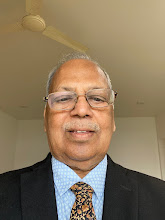
My photo
Dr. T. V. Rao is currently Chairman, TVRLS. A former professor and Board member at IIMA, Dr. Rao is the Founder President of National HRD Network and has been in the forefront of HRD movement in the country. Dr. Rao worked as a short-term consultant to UNESCO, Bangkok; USAID Indonesia; UNIDO Malaysia; and Commonwealth Secretariat, London and as HRD Consultant in India to over a hundred organizations in the public and private sectors. Dr. Rao received many awards including Ravi Matthai Fellow (AIMS), Asia Pacific HR Professional of the year 2019 (APFHRM) and Lifetime Achievement Award from Indian Academy of Management. Authored over 60 books.
Showing posts with label Organization Development. Show all posts

Sunday, December 7, 2014

Greed and OD

Greed and OD: Redefining the Values of Organization Development
T. V. Rao
Key note address to be delivered at the NATIONAL SEMINAR
On
“ORGANIZATION DEVELOPMENT (OD) & OD INTERVENTIONS: CHALLENGES & OPPORTUNITIES”
Organized By
THE DEPARTMENT OF PSYCHOLOGY
FACULTY OF EDUCATION & PSYCHOLOGY
 THE M.S. UNIVERSITY OF BARODA

Why do OD efforts in India do not give any visible results? Why is it after so many years of OD work neither OD interventions nor OD specialists seem to be widely acknowledged? Does OD result in any thing substantial or does it lead to anything at all apart from occupying the time and lives of a few people? Has it become a “time pass” activity when there is nothing else to do? These are some of the questions that are bothering me. These have bothered me for long and have begun to bother me more  as I see that sixty three years after independence and sixty years after the Indian republic was formed we seem to be nowhere near Nation building.
Divisiveness continues. It spreads from caste and religion based divisiveness, to political divisiveness to linguistic, regional, colour, education, health, batch, sector, section, department etc everywhere. Some divisiveness for improving the disadvantaged is fine but divisiveness leading to self destruction of a large part including that of the Nation is not acceptable.
We seem to live today in a scam driven world. Every day morning you wake up to hear what new scam has been unearthed. Starting with Satyam in the corporate world to CWG, 2G, Adarsh Housing, Mining and Land grab to everywhere. The nation’s time is taken away for protesting MPS,  MLAs and various other agents who should be spending their time in Nation Building.
Are the Indian corporations saved from this?  Has OD brought in certain amount of integrative outlook in our corporations?  In a world where organizations are built and developed to  sell than to build more, has OD done some good?  Organizations built by the sweat capital of many people suddenly get sold and the employees discover that they belong to a new management and a new organization that they have not heard before and they need to learn a new culture. . This has become the world order and Iida is no exception. Sometimes it appears that we are truly in the business of business and not that of service. In the past organizations used to be set up to serve others and in the process make some money to sustain themselves and grow. Today it appears that some organizations are being set up to make money and money alone. Even hospitals performance is being measured by the numbers in monetary measures  rather than patients served and benefits to society.  Government performance is also being measured by the numbers of schools and hospitals set up rather than what they are doing after they are set up.  
In other words short term orientation emerging out of greed has become the order of the day. The concept of service to society and working for larger cause is being forgotten except occasional when we talk of corporate social responsibility. Even this CSR gets reduced to projects to take care of the neighbourhood rather than getting integrated into everything that w e do in our corporations.
What are the implications of all this to OD today? Should OD change its course? I have chosen to present a few extracts on this occasion from our forthcoming book on “ Organization Development: Accelerating learning and Transformation” edited by Prof. S. Ramnaraayn of ISB and T. V Rao to be published by Sage response books this year. As a part of this book which contains about 37 chapters on various issues, my colleague Prof. Ramnarayan interviewed a few OD practitioners in India. I take this opportunity to present some extracts from these interviews and my own views and experiences of OD.    These experincecs indicate that OD is a lot more successful than what it has been widely known. However it has not reached all the sections and sectors it ahs to reach. We have a long way to go and perhaps we need to revisit and redefine its values or at least add to the list a core value of “Extension”.
Extracts from Interviews With Prof. S Ramnaraayn from the forthcoming book on OD (Ramnarayan and Rao, 2011)
Santrupt Misra on OD in Birla Group in an interview to Prof. Ramnarayan:
“Some of the interventions were extremely powerful for the organization. Every intervention communicated multiple messages to the organization.  For instance, the Chairman and the top managers started participating in the 360 degree feedback. It was an intervention that changed the cultural norm – the junior could also provide feedback to the senior. It created a sense of trust and transparency. It has prepared the top management of organization to receive and discuss feedback openly by sitting together. That was a powerful intervention.
There were interventions at the lower levels of the organization. High quality personnel were hired from leading management and engineering schools. They were paid competitive compensation in tune with the market rates. This was an intervention which communicated the importance of merit / competence to attract the younger generation with new skills like IT. It changed the paradigm of competence that the organization required. That was another powerful one.
We carried out an organization health study which was an important intervention. The feedback on how people perceived the organization was shared with the employees. Then, certain questions such as: “Do you want to do something? Do you want change? How do you change? What can you as an individual do to contribute to this change? What can organization do?” were posed to the employees.
Similarly, several team building exercises were introduced across functions to support structural changes as we moved from functional to SBU structure and also created global structures.
In doing all of these interventions, we used various resources and range of expertise from Indian, international, firms, individuals, teams, and so on. A number of consultants helped us carry out those interventions.
The emphasis was on churning the organization and creating new ideas and frameworks, and holding mirrors to help critical questioning and introspection, say through 360 degree feedback, survey feedback and numerous such approaches.
Are there some OD concepts that have outlived the utility?
The whole concept of the team needs to be revisited because today you have virtual teams. You have quick-set teams that come together for a purpose and break apart. They are not working together as teams over a longer period of time. So, the stability of team concept has changed. The entire issues around team interventions need to be revisited.

Extracts the Interview with Yogi Shriram of L&T
How do you think we should create and nurture OD practitioners?
It is important to think about this issue particularly when there are no formal courses. There are disparate small courses and certification, but I believe OD practitioners should be accredited by an institution. This should be based on practice and theory. It should be based on an actual OD change that the person has done in one or two years or even shorter duration in an organization and not on a project. The work should be examined and recognized by a set of practitioners. I would feel that the interns should be technically very sound and understand the literature. They may focus on one or two narrow areas of specialization, say appreciative inquiry, process consultation or coaching. I think it is very important to start a comprehensive OD course led by very senior people with a set of ethics with possibly collaboration with a reputed school abroad with a strong track record in OD.
The other key issue is that HR practitioners are scant in the leadership positions. Most HR practitioners are uncomfortable in discussing the business part and the conceptual part. Just as we need equal emphasis on both academic rigor and practice, we need equal attention to business issues and people issues.
P. M. Kumar of GMR on his experiences of OD and recommendations for future:
What would be your advice for learning and development professionals and young professionals getting to change and OD?
Have good networks, be resourceful to be able to connect with the right people and bring the most value based people in to work. 
Most importantly, you have to constantly ask yourself, is there any self interest that you are doing this in. Once the answer is ‘yes’ drop it like a hot potato. If you are ready as a practitioner, if it is in collective interest, then go. That’s my call. Timing and governance have to be made by every practitioner.  Fortunately, we have people across. And also, one more thing helped me right through my career. I have been versatile. I did process work, lab work, systemic job evaluation work, strategy and HR work, industrial relations, unions, settlement, and facilitation. Fortunately, when I look back, this has been an excellent exposure. I believe versatility is important for trust worthiness. Otherwise, you say that I have one hammer and everything looks like a nail. There are practitioners today for whom there is one answer for everything. They will not be accepted. They will only play a very marginal role. You need versatility, openness and see a wide range of possibilities.
Warner Burke in conversation with John R. Schermerhorn Jr. ( see Ramnarayan and Rao, 2011)
Are there certain competencies that all OD specialists should have?
Too much specialization in OD can be unproductive. An OD consultant must be a generalist. If a high degree of specialization is needed for a certain change effort then the OD consultant brings in this specialist for the job. For example, OD consultants are typically not compensation specialists but on occasion such expertise is needed. This need is only an occasional one and not in general. In other words, an OD consultant does not need to be a specialist in compensation even though changing some aspect of the reward system is often required for an overall successful change effort. I have suggested a set of competencies (see Table 2) that all OD specialists should have (Burke, 1994) which include such abilities as tolerance for ambiguity, ability to confront difficult issues, self awareness, and abilities to conceptualize and teach.
What are the most important cross-cultural issues and considerations for those interested in global applications of OD, say in India?
I have some but limited experience with the culture of India. I first was there in 1972 when I spent part of the summer as a visiting professor with the Indian Institute of Management, and traveled around much of the country. Change in India today is occurring at an unprecedented rate, and OD can be very helpful with the process, that is, helping organizations to plan, change instead of change merely happening to them. Indians have been interested in and practising OD well before 1972 when I was there, and my presentations then were well received. So, there is much history, and I do not see major cross-cultural issues with the US way of practicing OD in India. It has always been my understanding that OD practitioners in India respect theory and research, and work to apply behavioural science knowledge. The differences cross-culturally are there for sure, but not that easy to see immediately (after all, Indians speak English very well). We, Americans, must be diligent, however, about understanding subtle yet real differences, for example, how the dynamics of power and politics are manifested.
Dr. S. Chandrasekhar of IBM to Ramnarayan
Based on your OD experiences – those that have worked well or not so well – what are a few key lessons for OD practitioners?
Leaders cannot “outsource” change related work to some OD consultant - external or internal. It won’t work. They have to lead change personally .Too much jargon and conceptual models alienate people. Initiatives started well and not sustained create huge credibility gap. It is not very useful to use workshops and people assessments to “fix’ the trouble makers.  The business case for the change being sought needs to be very strong and explained very transparently. Else people will not be with you.

In an era of Global Competitiveness, Mega Projects, Community pressures, and Mergers & Acquisitions, what role do you think OD will play?
OD will continue to play a critical role in delivering change. Understanding competitors and doing things better than them needs deep organizational change. Executing Mega projects needs building alignment, rapid learning and capability building. Most times, OD has been relatively inwardly focused on the internal organization.  Dealing with communities, harnessing the eco-system around the organization and taking the OD plans into the larger community are important next steps. In M&A situation, OD programs must enable the combined entities to benefit by the synergies of the two organizations and not let one ‘dominate’ over the other.
What advice would you give to budding OD Practitioners? What are the key Do's and Don'ts?
Be passionate about OD. It is essentially an inter-disciplinary subject. So learn eclectically across sciences and arts. Learn to link your OD interventions with predictable and desirable business outcomes. Measure to improve. Avoid jargon. Communicate authentically. Enlist others and enroll support. Stay humble and maintain low profile. Work across generations and leverage diversity. We cannot be world-class if we always have an excuse, ‘oh this won’t work in India’. Be truly global and bring best practices from all over the world.
T. V. Rao’s views and comments (unedited from Ramnarayan and Rao, 2011)
Q: What do you conclude from Various OD in this part of the world?

TVR: OD as a planned change with long term involvement of OD facilitator has become a trend of the past. There have been many success experiences of the past. For example Dr. Udai Pareek, Dr. Abad Ahmed, Somnath Chattopadhyay, Dharni Sinha, Ishwar Dayal and Suresh Srivastava and such NTL trained OD facilitators worked with Organizations like the L7T, LIC, Medical Mission Sisters, ICI, State Bank of India etc. now a days you rarely find this work perhaps organizations like Tata Chemicals is an exception. As Dr. Santrupt Misra mentioned today OD has come to be short-term, quick and multiple intervention based. Specialization has gone up. So a variety of consultants are used. Some of assessment centers, other for 360 a few for executive coaching and the like. With enhancement of tendering process in PSUs, Component tendering process in PSUs, Component tendering has gone up rather than integrated development and planned and guided change. These have been successful with short-term gains. While they may cumulatively do some good for the organization, and integrated approach is still welcome. I have a feeling corporation like GE still continue to have long term engagement of the OD consultants.

Q: What do you consider as some of the success experiences in your own OD work?

TVR: The HRD work we had done both at L&T and State Bank of India is a success experience during that period. Recent work with Steel Authority of India and Bharat Electronics and Aditya Birla Group on Leadership Development using 360 Degree Feedback based interventions are another two examples of successful OD.

Everything is time bound. What is successful today may lay foundation for tomorrow. Once it is done the corporation grows and may not even remember that someone laid the foundation. For example strong foundations were laid in SBI through its training system in initial years. Later Udai and I worked for integrated HRD between 1975 and 1985. There was a sustained effort and hard work. It was successful. However it has gone to the background due to intensive dialogues with officers associations, change of leadership both at top level and in HRD. I re-entered along with Prof. S K Chakravarthy in mid nineties for specific task of a subsystem change. It was not continued beyond 5 years due to change of leadership both at the SBI top level and at Government level the Secretaries handling banking. They brought in new experts who did not have a clue of the history. For them it became a year to year event than planned change.

This is not to say short-term OD interventions don’t work. The HRD audit as a self-renewal mechanism, the 360 Degree Feedback as a change promoting intervention and Assessment Centers has worked well. As mentioned by Santrupt we were involved almost for a 5 year period with 360 DF in Birla Group. It was a great success as are of the inputs. In BEL we are involved in Leadership Development over the last seven years. A lot of change is taking place. A review of the work indicated both short and long term changes. For example short term it resulted in vision formulation, new product innovations and problems solving. Long term is resulted in increased openness and transparency.

A two day self-renewal workshop in XIM resulted in increased focus on Vision and deciding future course of action besides faculty involvement. A diagnostic study followed by a one day feedback workshop presenting the findings resulted in consolidation and increased focus on future strategies. So was the case of survey feedback in Bharat Petroleum, Cochin Refineries and the like. In Bharat Petroleum it was used to consolidate the gains of restructuring. After restructuring was done an employee satisfaction survey was conducted. The feedback communicated to employee revalidated the gains of restructuring and pointed the gaps in HR policies and helped BPCL to initiate new HR activities. Gati is a great example of sustained work coming out of top management commitment. There 360 DF has become of regular part of self renewal. Again a quick diagnosis of the Institutional concerns and a presentation to the entire team of the findings and with Aga Khan Foundation has become a stepping stone for consolidating gains and taking the Foundation in the direction its Founders have envisaged under the leadership of Dr Abad Ahmad is a success story of how short term interventions can lay foundation to facilitate the change process.

Q: What are some of the challenges OD and OD practitioners face today?


TVR: Execution is the major issue. Organizations seem to be highly short term result driven. They profess culture and values as important dimensions but focus extraordinarily on results and short term targets. This creates enormous difficulty for OD practitioners who like to work on long term and sustainable change.

Second mergers and acquisitions have become very common. In one company the executives told me that four years ago they belonged to a different company, two years ago to a different company and since the last six months he is working for a different company. In a four year period his organization has gone through three changes. While this may be a little uncommon most organizations live with certain amount of uncertainty. Ironically when mergers and acquisitions take place that is the best time for process work as it calls for adjustments and cultural change. Under uncertainties sustained focus on values, culture and long term thinking becomes difficult. OD becomes a short term quick fix problem solving exercise than a planned change for long term.

Appreciation for behavioral science based interventions and behavioral scientists ahs not in any way gone up while appreciation for specific techniques and technologies has gone up. For example the top management seems to appreciate the use of assessment cents for a specific group of people and at a given point of time. For example when they need to develop a group of high fliers or when they find shortage of tenant rather than making it a continuous process to upgrade talent or as a talent development tool. Same way survey feedback or 360 degree feedback, or outbound training becomes a onetime exercise to bring in process sensitivity than a continuous effort.

On the positive side many technologies are being sued. The OD filed has expanded to include a variety of techniques and methods.

HRD and OD have come face to face. Two decades ago there used to be issues like whether OD is part of HRD or HRD is a part of OD. Today the content is not so much as what it is part of what but more on which technology or intervention works better and under what circumstances. Some organizations are using LSIP technologies and others role based interventions and while some others use Assessment centers and 360 Degree feedback and a few others HRD audit, survey feedback and vision mission exercises etc. What is being undertaken is a technology based OD rather than a change oriented value driven process sensitive OD.

OD specialists as class is on the decline and specialization has gone up so much like in medicine rather than general practitioners today e see Executive Coaches, Assessment Center experts, survey feedback experts and performance management specialists. Sub system specialization has gone up.

Training focus remained and continues to remain the same as before and so are the concerns.

Q: What do you think is the Future of OD and what Direction it is taking and it should take?

TVR: I think OD as discipline and science deserves more attention than what it has commanded so far.  Process sensitivity and Behavioral science knowledge provides the base for good OD work. We need to understand people in different settings as individuals, role holders, dyads, teams or subsystem members and organizational members and multiple role holders and mute-organizational stake holders besides citizens of a nation or products of a culture. In Asian region people are highly talented and are products of complex interactions of history, culture, families, heritage and other dynamic factors. Modern organizations and competitive world adds to this complexity. Unlike in the west where people tend to be systems driven and norm respecting in this part of the world there is no one norm or no one system to follow. People seem to respect one another perhaps a lot more than they respect systems. Given these complexities of human nature, we need to study people in their current and changing contexts more deeply before we can plan and carry out interventions for change. Unfortunately such a systematic and scientific study of people is lacking. Psychologists in this part of the world have not enhanced our insights about human beings and their motivational patterns, learning styles etc. We are still dependent on the past knowledge and knowledge from the west. It is only in the recent past attempts to learn from our Vedic culture about the nature of human being has gone up. Even this is limited to a set of hypotheses of fitting ancient wisdom into the modern organizations.
What is needed in future is a systematic and scientific study of the human being and his nature in the current organizational contexts.
Change and drivers of change and success stories and failure of change are required in large quantities and with more perspectives- psychological, sociological and anthropological and organizational. Only when such studies are conducted can a body of knowledge develop. The future therefore ahs to focus on more systematic research to discover he fundamental nature of the human being in the context of modern organizations and enhance our ability to predict behavior.
Therefore there is a need for scientific base for OD. More researches need to be trained in OD.
Institutions like the ISABS have got reduced some times to social networks without any scientific rigor and research base. The involvement of Institutions like the IIMA that used to happen in seventies has tremendously come down. As a result the teams of Applied Behavioral scientists that get trained or certified from these institutions have become at best factories for conducting training programs with limited knowledge. The future has to be research driven and should lay more foundation for scientific knowledge. If this does not happen OD will die its natural death and at best will be handled by a few people who lack depth and get called as OD Facilitators mainly on the basis of a few programs they attended than out of scientific study and affecting change.

We need to revisit the values of OD and underline those that have to do with short term orientation and greed.
Warrick (2005) from his research on OD identified the following 13 characteristics and 15 values of OD:
Characteristics of OD (Warrick, 2005)
  1. Recognizes what you change and how you change as equally important and emphasizes health, effectiveness, and adaptability of an organization.
  2. OD can be used with all sizes of organizations and at all levels of an organization.
  3. Recognizes the dynamic process of change and that change takes time and quick fix solutions rarely last.
  4. Approaches change from systems or big picture perspective and considers interrelatedness of various systems and components.
  5. OD is an interdisciplinary approach and draws heavily from behavioural science knowledge.
  6. OD is data driven.
  7. OD uses action research process and involves key stake holders.
  8. OD is typically facilitated by professionally trained change agents who believe in helping others to discover solutions to their own issues than dictating what should be done.
  9. OD is a value driven approach that seeks to instil values and build cultures that bring out the best in people.
  10. OD is collaborative top down and bottom up process.
  11. OD is an education based strategy.
  12. OD is committed to transference of knowledge and skills
  13. OD emphasizes the importance of reliable feedback in monitoring and managing the change process.

OD values

1.      Development
2.      Professionalism
3.      Helping people and organizations
4.      Respect to all individuals
5.      Inclusion, collaboration and participation
6.      Open , honest and candid communications
7.      Authenticity
8.      Inquiry
9.      Community
10.  Diversity
11.  Personal and organization awareness, growth and learning
12.  Experimentation
13.  Creating a realistic hope
14.  Integrity
15.  Confidentiality

Udai Pareek’s eight values as OD values OCTAPACE seem to take care of most of these values. (Openness, Collaboration, Trust, Authenticity, Proactivity, Autonomy, Confrontation, and experimentation). It is time to add to this list  Extension Value coming out of Udai Pareek’s concept of  Extension Motivation. Extension value is a value of extending oneself to others in the larger society or working for a larger cause. It is further defined as having a larger and long term orientation for the good of the “People and Society; making sacrifices for larger good and not being greedy ( a strong and selfish desire for personal possessions, personal wealth or personal power  beyond limits,  for their own sake and at the cost of deriving others in the society and an inability to use them for the larger good not using them for serving others). This is in tune with large amount of professed concern of the country and its leaders for sustainability, environment,  saving the earth, reducing pollution, conserving energy and building for the future.

References:
Ramnarayan, S and Rao, T. V. (editors)  Organizational development for Learning and transformation: New Delhi: Sage India, Response Books Forthcoming, 2011
Rao, T. V. Organization Development Experiences – A case for enriching HRD through OD: Ahmedabad: IIMA Working Papers, 2009.
Warrick, D. D. (2005) Organization development from the view of the Experts, in Rothwell, W J and Sullivan, Roland (cited below pages 164-186).

Worley, C. G, Rothwell, W J and Sullivan, Roland. (2005) Competencies of OD practitioners, in Rothwell and Sullivan (editors, cited earlier, 2005 pages 135-163)


Dr. T. V. Rao is Chairman, TVRLS and Adjunct Professor at IIM, Ahmedabad. He could be contacted at : raotalam@gmail.com or tvrao@tvrao.com; Web site: www.tvrls.com 

Saturday, February 25, 2012

OD and HRD


Is OD a Part of HRD or HRD a Part of OD: a view
T. V. Rao
I thought this controversy is no more.
 Several years ago I was invited by Dr. B. L. Maheshwari the Founder of the Centre for Organization Development to consider joining it as its Director. That was the time I was doing three main jobs: Chairman of the Post Graduate Program at IIMA, President of ISABS and also was in the thick of setting up the National HRD Network. ISABS facilitated the work of HRD Network by agreeing to offer a HRD Facilitators lab jointly with NHRDN. NHRDN was not known in those days and it is the magnanimity of ISABS that has facilitated NHRDN to launch its HRD Facilitators program. That was also the time the Indore Management Association launched the Indore chapter of NHRDN as a part of Indore Management Association. When I approached some people in Indore to start a Chapter of NHRDN they said, “We have a strong Management body here and why is there a need for starting another body? We will do it as a part of IMA”. I have readily agreed. That was the time HRD Network was launched in south by the Madras Management Association thanks to Dr K. M. Thiagarajan. Russi Modi inaugurated it and the NHRDN at Ahmedabad for which K. K. Verma and Anil Khandelwal were active leaders launched the ISTD, Ahmedabad chapter on NHRDN platform. There was a lot of collaboration among these bodies at that time at local chapter levels. Te questions were not asked. In fact a full issue of HRD Newsletter was devoted to HRD and OD. IIMA called its program HROD program when it offered the same for HR Facilitators and NHRDN called it HRD.
In my innocence or eagerness to promote HRD, I suggested to Dr. Maheshwari that if I have to join COD and lead it as its Director, my vision will be to make it a HRD lead institute and I would use it as a centre for HRD and Applied BS. He said I may do anything I like except changing the name of COD to CHRD or Centre for Applied Behavioural Science.  Thank God that I never asked Dr. Maheshwari to change the name of COD for me to join it!  Sometimes I wonder why Dr. Maheshwari called it Centre for Organization Development. Dr.B.L.Maheshwari set up the Centre for Organization Development (COD) in 1980 with three core values: strong client orientation, high standards of quality and an Informal Growth & performance oriented work culture. In fact Dr Maheshwari was neither a member of ISABs nor trained at NTL to the best of my knowledge. However he has done a lot to promote OD in his own way through his centre. The COD library is filled with the photographs of a number of OD stalwarts. He used largely Management by Objectives as an OD tool in his early years and latter he and the COD have done a lot of work on Organizational Culture, Performance Management, Managerial effectiveness, Coaching, Quality circles and such other areas and in a variety of sectors. The work of COD makes it clear that you need not be an accredited OD Facilitator to do solid OD work. I hold this view to HRD, Applied Behavioural Science and even Management. There have been many successful Managers who manage their firms well and they don’t have an M B A.
The answer to whether OD is a part of HRD or HRD a part of OD is in our minds and it depends on the perspective we use. I wonder sometimes why the same question is not asked with Management as a filed.  Is Management (Professional Management or all categories of Management) a part of HRD or HRD a part of Management? At National level Management is a part of HRD. The AICTE which governs Management Institutes, Engineering colleges etc. is a part of the HRD Ministry. At Institutional level HRD is a discipline and is a part of OB or HRM and OD is taught as a part of  OB or HRM. In L&T OD was conceptualised as paart of HRD and yet some years the Vice-President to whom HRD was reporting was called as Vice-President Personnel & OD. In organizations where there is no OD the question does not arise. Some organizations have separate OD cells. For example HMT several decades ago had an OD cell. In L&T no less a person then Udai Pareek recommended in as long ago as 1975 recommended OD to be part of HRD. The intention was to have HRD also undertake OD work to facilitate organizational learning. Some organizations have called their training facility as HRD Institute.  
In my view OD is not a function. It is a process, it has technology and it follows a set of values and it should remain so. I would not even want OD to become a discipline or a function. When you make anything a function in a country like India where means have a knack of becoming ends and the original purposes get quickly forgotten, I don’t recommend any one to jump and create new functions and new structures. (For example Anna Hazare movement started as movement to curb corruption a strong Lokpal is supposes to be a means to curb corruption. No on e has ever seen if Lokpal will have the real capability to curb correction. It is a pious hope of all of us. But now corruption has gone to the background and Lokpal bill has become a matter of debate and corruption continues quietly to do its work while we all debate Lokpal).
Sometimes I feel that making a discipline as a function does more harm to the discipline and its development than letting it be. The same thing happened to HRD in some organizations. There are HRD Managers not knowing whether they represent Human Resource Development or Human Resource Department. The main job of some of them is to get right agency to handle their HR through a process of outsourcing. They spend their time standardising the outsourcing practices like floating tenders to get HR services at low cost  than to offer HR services themselves. This is a clear consequence of establishing a department and giving it a mandate. I dread the ay OD becomes a department as we will have another tender floating and consulting hunting department. It was not the intention of Udai Pareek. And the first HRD Manager in the country Dr. Dennyson Pereira  has been both a member of ISABS and an NTL trained persona and has done real good OD work by taking up diagnostic studies and carrying out a number of real OD interventions in OD. He did all this as part of HRD.
 I think the issue is unnecessary. The answer to whether OD is part of HRD or HRD is part of OD depends on the need, convenience and your approach. You could be right either way and argue well your case. Both can be treated broadly as philosophies, processes, value driven disciplines, functions and departments etc. For me recognising that OD as a process and respecting it is of paramount importance and making it a function is doing disservice to the field of ever growing field of OD. It has body of knowledge and it is a wide open field. India is a proud nation. While Kurt Lewin and team developed OD is the west India had CD in the east. The Community Development programs in India started as long ago as Independent Indian started or even before had the same principles in them as OD principles: people participation, facilitation by an external facilitator trained in the respective field (agriculture, health, education etc.), with the support of the top management (village Pachayats and other influential leaders) and sued a variety of interventions.  HRD is as old as civilisation and civilisations grew as a result of people developing themselves through a variety of activities and actions including learning and development and not because of HRD Departments as they did not exist in those days! 
I have shared this as a post  in OD in Sangam Discussions

Monday, October 24, 2011

OD Present and Future: Conversations with Prof. T. V. Rao

OD Present and Future: Conversations with Prof. T. V. Rao


The lessons from his book co-edited book (editors S. Ramnarayan and T. V. Rao: “Organization Development: Accelerating Learning and Development; Sage India, 2011) are presented in a conversational form with T. V. Rao in this interview. Prof. Rao attempts to answer the following questions here. It is hoped that this conversation  highlights the lessons from the book and points also to the future directions.

1. What we conclude from various OD experiences in India about OD in this part of the world

2. What do you consider as some of the success experiences in your own OD work?

3. What are some of the challenges OD and OD practitioners face today?

4. What do you conclude from various OD experiences?

5. What do you think is the future of OD?

Q: What do you conclude from Various OD in this part of the world?

OD as a planned change with long term involvement of OD facilitator has become a trend of the past. There have been many success experiences of the past. For example Dr. Udai Pareek, Dr. Abad Ahmed, Somnath Chattopadhyay, Dharni Sinha, Ishwar Dayal and Suresh Srivastava and such NTL trained OD facilitators worked with Organizations like the L7T, LIC, Medical Mission Sisters, ICI, State Bank of India etc. now a days you rarely find this work perhaps organizations like Tata Chemicals is an exception. As Dr. Santrupt Misra mentioned today OD has come to be short-term, quick and multiple intervention based. Specialization has gone up. So a variety of consultants are used. Some of assessment centers, other for 360 a few for executive coaching and the like. With enhancement of tendering process in PSUs, Component tendering process in PSUs, Component tendering has gone up rather than integrated development and planned and guided change. These have been successful with short-term gains. While they may cumulatively do some good for the organization, and integrated approach is still welcome. I have a feeling corporation like GE still continue to have long term engagement of the OD consultants.

Q: What do you consider as some of the success experiences in your own OD work?

The HRD work we had done both at L&T and State Bank of India is a success experience during that period. Recent work with Steel Authority of India and Bharat Electronics and Aditya Birla Group on Leadership Development using 360 Degree Feedback based interventions are another two examples of successful OD.

Everything is time bound. What is successful today may lay foundation for tomorrow. Once it is done the corporation grows and may not even remember that someone laid the foundation. For example strong foundations were laid in SBI through its training system in initial years. Later Udai and I worked for integrated HRD between 1975 and 1985. There was a sustained effort and hard work. It was successful. However it has gone to the background due to intensive dialogues with officers associations, change of leadership both at top level and in HRD. I re-entered along with Prof. S K Chakravarthy in mid nineties for specific task of a subsystem change. It was not continued beyond 5 years due to change of leadership both at the SBI top level and at Government level the Secretaries handling banking. They brought in new experts who did not have a clue of the history. For them it became a year to year event than planned change.

This is not to say short-term OD interventions don’t work. The HRD audit as a self-renewal mechanism, the 360 Degree Feedback as a change promoting intervention and Assessment Centers has worked well. As mentioned by Santrupt we were involved almost for a 5 year period with 360 DF in Birla Group. It was a great success as are of the inputs. In BEL we are involved in Leadership Development over the last seven years. A lot of change is taking place. A review of the work indicated both short and long term changes. For example short term it resulted in vision formulation, new product innovations and problems solving. Long term is resulted in increased openness and transparency.

A two day self-renewal workshop in XIM resulted in increased focus on Vision and deciding future course of action besides faculty involvement. A diagnostic study followed by a one day feedback workshop presenting the findings resulted in consolidation and increased focus on future strategies. So was the case of survey feedback in Bharat Petroleum, Cochin Refineries and the like. In Bharat Petroleum it was used to consolidate the gains of restructuring. After restructuring was done an employee satisfaction survey was conducted. The feedback communicated to employee revalidated the gains of restructuring and pointed the gaps in HR policies and helped BPCL to initiate new HR activities. Gati is a great example of sustained work coming out of top management commitment. There 360 DF has become of regular part of self renewal. Again a quick diagnosis of the Institutional concerns and a presentation to the entire team of the findings and with Aga Khan Foundation has become a stepping stone for consolidating gains and taking the Foundation in the direction its Founders have envisaged under the leadership of Dr Abad Ahmad is a success story of how short term interventions can lay foundation to facilitate the change process.

Q: What do you conclude from various OD experiences?

I think the following conclusions can be drawn.

1. The term OD is not used popularly. Like in the west OD in this part of the world has also undergone a lot of change. Process facilitation and OD interventions have become a part of organizational improvement and change management programs in India. Many of them may not even use the term OD and still carry out OD activities.

2. A variety of HR interventions have been used ranging from individual based, interpersonal and role based, group and subsystem improvement based to total system change, process facilitation and quality improvement program.

3. Total system change related interventions are being used selectively using LSIP, future search etc. methods (Indian Railways, Mawana Sugar etc.)

4. OD has become short term focused and quick-fix solution oriented. Focus on cultural change has become less important.

5. OD is being constantly evaluated for its effectiveness in serving the organizational good.

Q: What are some of the challenges OD and OD practitioners face today?

Execution is the major issue. Organizations seem to be highly short term result driven. They profess culture and values as important dimensions but focus extraordinarily on results and short term targets. This creates enormous difficulty for OD practitioners who like to work on long term and sustainable change.

Second mergers and acquisitions have become very common. In one company the executives told me that four years ago they belonged to a different company, two years ago to a different company and since the last six months he is working for a different company. In a four year period his organization has gone through three changes. While this may be a little uncommon most organizations live with certain amount of uncertainty. Ironically when mergers and acquisitions take place that is the best time for process work as it calls for adjustments and cultural change. Under uncertainties sustained focus on values, culture and long term thinking becomes difficult. OD becomes a short term quick fix problem solving exercise than a planned change for long term.

Appreciation for behavioral science based interventions and behavioral scientists have not in any way gone up while appreciation for specific techniques and technologies has gone up. For example the top management seems to appreciate the use of assessment cents for a specific group of people and at a given point of time. For example when they need to develop a group of high fliers or when they find shortage of tenant rather than making it a continuous process to upgrade talent or as a talent development tool. Same way survey feedback or 360 degree feedback, or outbound training becomes a onetime exercise to bring in process sensitivity than a continuous effort.

On the positive side many technologies are being used. The OD filed has expanded to include a variety of techniques and methods.

HRD and OD have come face to face. Two decades ago there used to be issues like whether OD is part of HRD or HRD is a part of OD. Today the content is not so much as what it is part of what but more on which technology or intervention works better and under what circumstances. Some organizations are using LSIP technologies and others role based interventions and while some others use Assessment centers and 360 Degree feedback and a few others HRD audit, survey feedback and vision mission exercises etc. What is being undertaken is a technology based OD rather than a change oriented value driven process sensitive OD.

OD specialists as class is on the decline and specialization has gone up so much like in medicine rather than general practitioners today e see Executive Coaches, Assessment Center experts, survey feedback experts and performance management specialists. Sub system specialization has gone up.

Training focus remained and continues to remain the same as before and so are the concerns.

Q: What do you think is the Future of OD and what Direction it is taking and it should take?

I think OD as discipline and science deserves more attention than what it has commanded so far. Process sensitivity and Behavioral science knowledge provides the base for good OD work. We need to understand people in different settings as individuals, role holders, dyads, teams or subsystem members and organizational members and multiple role holders and mute-organizational stake holders besides citizens of a nation or products of a culture. In Asian region people are highly talented and are products of complex interactions of history, culture, families, heritage and other dynamic factors. Modern organizations and competitive world adds to this complexity. Unlike in the west where people tend to be systems driven and norm respecting in this part of the world there is no one norm or no one system to follow. People seem to respect one another perhaps a lot more than they respect systems. Given these complexities of human nature, we need to study people in their current and changing contexts more deeply before we can plan and carry out interventions for change. Unfortunately such a systematic and scientific study of people is lacking. Psychologists in this part of the world have not enhanced our insights about human beings and their motivational patterns, learning styles etc. We are still dependent on the past knowledge and knowledge from the west. It is only in the recent past attempts to learn from our Vedic culture about the nature of human being has gone up. Even this is limited to a set of hypotheses of fitting ancient wisdom into the modern organizations.

What is needed in future is a systematic and scientific study of the human being and his nature in the current organizational contexts.

Change and drivers of change and success stories and failure of change are required in large quantities and with more perspectives- psychological, sociological and anthropological and organizational. Only when such studies are conducted can a body of knowledge develop. The future therefore has to focus on more systematic research to discover he fundamental nature of the human being in the context of modern organizations and enhance our ability to predict behavior.

Therefore there is a need for scientific base for OD. More researches need to be trained in OD.

Institutions like the ISABS have got reduced some times to social networks without any scientific rigor and research base. The involvement of Institutions like the IIMA that used to happen in seventies has tremendously come down. As a result the teams of Applied Behavioral scientists that get trained or certified from these institutions have become at best factories for conducting training programs with limited knowledge. The future has to be research driven and should lay more foundation for scientific knowledge. If this does not happen OD will die its natural death and at best will be handled by a few people who lack depth and get called as OD Facilitators mainly on the basis of a few programs they attended than out of scientific study and affecting change.

Organization Development and HRD in India

OD and HRD in India: A Historical Perspective

T. V. Rao
Chairman, TVRLS and Adjunct Professor, Indian Institute of Management, Ahmedabad.
( Extracts from the Keynote presented at the 6th AODN held in Nanjing, China on 23rd October, 2011)

Introduction and Overview

Organization Development in India started in early sixties with a group of people from educational Institutions like the two Indian Institutes of Management, SIET Institute Hyderabad, L&T, State Bank of India and such other corporations sending their staff to NTL. The Indian Society for Applied Behavioural Science was formed as an Indian NTL by many people associated with it like late Udai Pareek, Dharni Sinha, Suresh Srivastava, Nitish De, Francis Meninzes etc. Among the founders are living persons like Paul Siromani, Fr. E. McGrath, Prof. Ishwar Dayal and Somnath Chattopadhyay. OD was very popular until eighties. The last two decades can be considered as HRD decades and OD has been treated as a part of the role of HRD Professionals. However as a large number of HRD professionals have not acquired competencies as OD facilitators OD has remained dormant. In the NGO sector Self-renewal replaced OD and the academy of HRD popularised the concept of Self renewal among the not for profit organizations. About a decade ago Roland Sullivan facilitated a whole system change workshop with about a hundred NGOs participating in Hyderabad. Latter Marvin Weisboard along with Sandra Janoff visited India and trained a group of Trainers in Future Search approach. Also the LSIP got popularised with Eicher consultancy and the Academy of HRD. A few organizations started using the same in recent times.

This paper describes first currently used HRD and OD interventions and traces the history of OD and HRD in India and concludes with some lessons and trends for future.

OD and HRD Interventions: Current Status in India

In the Indian corporate sector the following OD interventions have been very popularly used in the past in seventies and eighties and many of them continue to be considered effective:

Sensitivity Training and team building exercises that developed and improved sensitivity to each others’ feelings and interpersonal relations and built team work and effective teams. This became less popular in later years with virtual teams taking over and business orientation taking up a dominant role than interpersonal relations and individual sensitivity to feelings.

Survey feedback in which organizational climate and employee satisfaction surveys were conducted and used to improve organizational effectiveness. Recent times they are replaced by employee engagement surveys, great place to work, happiness at work and employee commitment surveys. These surveys are used to bench mark and then enhance employee engagement and commitment at work. The interventions lead to re-examine select systems and processes in the company including the personnel policies, work atmosphere, leadership styles, etc. For a description of this intervention see the chapter by T V Rao in the OD Book by Ramnarayan and Rao (Sage, 2011).

Achievement Motivation development was used to promote entrepreneurial competencies in India. This was called as Achievement Motivation training (AMT) and continues to be used selectively. Tata Chemicals is a good example of using this tool along with many other interventions to make managers more achievement driven. For the NGOs a combination of AMT with Extension Motivation training has been found to be more appropriate interventions for rejuvenation. The chapter in the book by Ramnarayan and Rao describe the Tata Chemicals experience. In late seventies and early eighties Udai Pareek and T V Rao worked as UNIDOP Consultants with MIDF Malaysia, Mara Institute of Technology and various other agencies and developed in-house competencies to give AMT and develop entrepreneurship. They also participated in developing National Entrepreneurial development association. With the Prime Minister’s office taking the Entrepreneurship development very seriously and deploying the PM's Secretariat to facilitate this, NERDA became defunct but the seeds were sown by Achievement Motivation training and many banks and educational institutions participated in this.

360 Degree Feedback is being used extensively in India as a leadership development tool. The author has used this for Birla group in Indonesia, Thailand, Philippines, and Egypt and for Chenrai group in Nigeria etc. In this methodology 360 Feedback profiles are prepared and given to each individual in a 3 to 4 day workshop where they learn about the leadership roles they should perform, get insights about how well they are performing them and also get an opportunity to enhance their styles, delegation and leadership qualities. They read books, stories of great leaders from their country as role models and prepare an action plan to improve their managerial and leadership effectiveness. In the public sector Bharat Electronics and such other corporations have taken the lead. The action plans are shared with the top management and also the profiles of the top management team coming out of the 360 Degree feedback issued to make other development interventions.

Role based interventions where the managers are given insights to understand how they spent their time. Analyse the way they are performing various roles like articulating vision, developing strategies, securing information for business development, managing their customers. Maintaining relationships and managing them well for growth and development etc. are extensively being used. The role based interventions in seventies and eighties focussed on role stress, role effectiveness, role efficacy, role negotiations and aimed at making roles more effective. Role effectiveness workshops were used.

Leadership styles and their assessment using psychometric tools and building feedback based interventions. Blake and Mouton’s employee-centred leadership style versus task-centred style based tools were used and participative and empowering styles were developed. The concept of Nurturing-task leader became very popular. Dr. T V Rao was invited by David McClelland of Harvard University to adopt a Social Maturity scale he and Abigail Stewart (now at Michigan University) were developing at that time (Daniel Goleman’s Emotional Intelligence and Spencer’s competencies at work and the work by McBer later are based on this work by McClelland). Dr Rao developed a leadership styles tool applicable for the Asian region where he discovered that paternalistic or benevolent style, critical style and developmental style were considered the most popular styles. Dr Mahathir’s style and success in building Malaysia is a good example of how successfully a combination of the three styles can be used. Many Indian corporate are using this tool to identify and develop right combination of these styles. These are done through leadership development workshops which use 360 degree feedback an intervention.

Other HRD Interventions: With mergers and acquisitions constantly going on the country and outside, cultural integration interventions though various HR systems like vision sharing, value clarification, LSIP, performance management systems, role clarity exercises, organizational restructuring and de-layering are used quite frequently. Competency mapping and developing competency models to prepare organizations for the future is also picking up in the country. Performance Management (traditionally called as performance appraisal systems) is the most used and misused HRD subsystem in India. While performance planning through Key Performance Areas (KPAs) or Key Result Areas (KRAs) is well accepted, inability to differentiate work and KPAs or KPAs at different levels and the consequent issues in rewarding individuals remain a major concern. Use of normal curve in rewarding and recognising people is a major issue of debate. Performance coaching and feedback training continue to be rigorous with a great gap between what is agreed in seminars and what is practiced by line managers. Most line managers find it difficult to give feedback to their juniors though they agree intellectually that it is their duty to give periodic feedback. Relationships seem to play a very critical role in the success or failure of HR interventions that compel individuals to compare and assess. As a result Assessment Centres most popularly called as ADCs (Assessment and development centres) following the models of those initiated by Byham and others at AT&T in sixties with outside specialists to assess the competencies of employees particularly at senior levels has gained considerable momentum. Very few HRD Managers however are trained as process specialists and undertake OD interventions. They seek outside help for facilitation. Succession planning is a major issue. The need for heterogeneous HRD polices to take care of the varying needs and preferences of gen X and gen Y is gaining momentum.

Whole System Change with Self renewal teams and process sensitivity of teams is another intervention that has been successfully practiced by a number of corporations. This starts usually with the diagnostic workshop where the entire systems issues are diagnosed with the help of a facilitator. The issues then get grouped into several subsystem related issues. Teams get appointed to go into diagnosis of the existing situation and, find desired situation and work towards movement to the same. The diagnostic results and action plans are presented and discussed all through the organization and work groups or teams get appointed to implement and monitor. Periodical reviews are planned and change monitored until he next whole system diagnosis around two to three years after the initial diagnosis. Organizations like the L&T ECC and SAMTEL have used this effectively. A few organizations and particularly those interested in whole system change use this selectively.

LSIP and such other whole system change based interventions have also been used by a few enlightened organizations. (see the case study by Anil Sachdeva in the book by Ramnarayan and Rao, Sage 2011)

HRD Audit: HRD is defined in India as continuous competency building of Individuals, teams, inter-teams and the organizational capabilities to do their jobs well and enjoy the same. HRD in India the way it is defined and promoted in the last ten years has a lot in common with OD of the past. However most HR people have not understood the same as Personnel management and training and development Professionals also called themselves as HR professionals and has diluted the concept of HRD. To redraw the attention of the top management and HRD professionals to this Individual, team and Organization development role of HRD, the concept of HRD Audit has come into existence. The first book across the world on HRD Audit was written by Prof. T V Rao and published in 1999. HRD Audit was necessitated because it was felt that most HR people don’t do their jobs well. Sometimes even CEOs don’t know how to use the HRD professionals. HRD is the business of every employee. They need to recognise that they are responsible for their development. HRD departments should perform a developmental role and top management should focus on culture building and intellectual capital formation. HRD audit aims at doing a systemic evaluation of HRD systems, strategies, HRD competencies (of line managers, HR department and the top management), Organizational culture, values and Talent management and study its impact and make recommendations for enhancing HRD’s impact to do achieve organizational goals and vision. HRD audit as OD interventions has been successfully used in India. (see the chapter on HRD Audit in the OD book by Roland and team)

OD and HRD in India: A historical account

The foundation for Organization Development, popularly known as OD has been laid in early part of the last century by Kurt Lewin. OD as a field of study had its roots in Kurt Lewin’s work on change. It started as Action Research for change in the larger society and with societal problems and put in organizational context; it emerged as a field of study for initiating, implementing and managing change in a planned way. Today OD has come to stand out to represent a body of knowledge and a field of study with focus on change in a planned way. This paper deals with various facets of this field of OD as it is understood and practiced in India.

In mid-fifties the concepts of planned change using behavioral science knowledge and participative methods was brought into India by a group of people working as Peace core volunteers. The first known series of experiments were conducted by Rolf Lynton in Mysore with a group of youth Volunteers which was published as “The Aloka Experience”. In early sixties a number of experts from the Indian Institutes of Management, at Ahmedabad and Calcutta, TMTC Pune and the SIET Institute Hyderabad got trained at the Kurt Lewin Inspired National Training Laboratories, Bethel as T- Group or L-Group Facilitators.

These included Udai Pareek, Dharni Sinha, Ishwar Dayal, Somnath Chattopadhyay, Francis Menizes, Nitish De, Suresh Srivastava, Manohar Nadkarni, Tarun Sheth, Paul Siromani, and Fr. McGrath, D F Pereira etc. who initiated the T-Group training and laid foundation for OD. For a long time OD was limited to T-Group training and team building workshops. Besides the use of this methodology in business schools and use of its allied methodologies like Achievement Motivation Training in business schools, corporate houses like the Tata’s, and public sector undertakings like the State Bank of India, Bharat Heavy Electricals Limited (BHEL) and Coal India used and promoted this methodology. Slowly by seventies OD extended itself to use different interventions like the survey feedback, organizational structuring, process consultation, psychometric tool based assessments, self renewal workshops, role based interventions and the like. With the starting of the Indian Society of Applied Behavioral Sciences (ISABS) as a professional body by the above mentioned Organizational Behavior expects the skill base required to promote OD got rooted.

Somnath Chattopdhyay fondly remembers "... a meeting that -- Abad Ahmed , Somnath Chattopadhyay , Ishwar Dayal , Francis Menezes and Suresh Srivastava had at the Conference Centre of NTL (1966) to discuss about the foundation of a society in India on the pattern of NTL. The dream that we envisioned came to fruition in the shape of Indian Society for Applied Behavioural Science (ISABS) in 1971......" (Memoirs from ISABS)

According to late Dr. Dharni Sinha: “...ISABS we established in 1971, almost 15 years after application of behavioural science in India (Lynton 1960) .....During the course of Conference entitled "Developments in Experience Based Learning" held at Pune from December 05 to 06, 1971 lead to the emergence of ISABS. The Conference was attended by 20 professionals -- Dharni P.Sinha, Fred Massarik , KK Anand, K.J.Christopher, Margaret Roderick, E.H.McGrath, Jim Filella, Alan Batchelor, Donald Bilby, S.N. Pandey,Pulin Garg, S.C.Daftadar, Paul Siromoni, Francis A. Menezes and Dilip K. Lahiri. The members shared their experience of behavioural science experiments in educational and industrial systems in the country.....The founder members present decided to include colleagues who were not present in the conference but had made distinguished contribution in the field like Nitish R. De, Udai Pareek, Ishwar Dayal, Abad Ahmad and Somnath Chattopadhyay. The founder members of ISABS had one thing in common i.e. they all had gone through T-Group ("T" for Training) experience in the United States of America or in India….."

The skill base maintained its distinct identity as T-Group training or largely known through ISABS membership (ISISD or Sumedhas or other groups that broke away from ISABS to focus on identity issues). With the emergency of Human Resource Development concepts and departments the focus shifted to HRD and though OD continued its work silently was not a predominantly publicized field.

In the year 1974 Udai Pareek and the author of this paper were invited to review the performance appraisal system in a large engineering company Larsen and Toubro (L&T) Limited. Their interviews with large section of managers indicated the need for facilitation of strong learning and development orientation through systems like performance and potential appraisals. The two professors conceptualized a Human Resources Development Department that included OD as a part of its functions. L&T promptly established a new HRD department with the responsibility of facilitating learning among individuals, dyads, teams and the entire organization. A well known OD specialist Dr Dennyson Pereira who was associated with NTL and has already been conducting OD interventions was appointed to head the HRD Department. He silently carried out various change interventions within L&T. Soon a large banking conglomerate the State Bank of India also established a HRD Department under the guidance of the two professors. The Indian Institute of Management where the two professors worked started a series of courses on HRD and trained a large number of HRD Facilitators. ISBS also conducted HRD Facilitators' labs to promote process orientation among the HRD Managers. By 1980s the traditional personnel function as well as the Training and Development function got re-titled as HRD. Many of them without process orientation have re-titled themselves as HR Managers or HRD managers thus diluting the concept of HRD originally formulated at L&T. The OD part of HRD was neglected due to this lack of process orientation and skills. To emphasize the concept of “Learning” and “Development” as the core of HRD, a series of seminars were held both by the IIMA and XLRI another Management school in the Eastern Part of India where L&T has offered a Chair Professorship and established a center for HRD. A National HRD Network was established to further promote HRD in its true sense among Indian organizations. The body grew and remains focused on learning and Development. However two other professional bodies called the National Institute of Personnel Management (NIPM) and the Indian Society for training and Development (ISTD) a parallel body and off shoot of the ASTD also started focusing on HRD. In the process the focus in eighties remained on the role of HRD departments and their subsystems like Performance appraisals, rewards, potential appraisals, feedback and coaching became the focal points and OD as a function of HRD managers got neglected. Details of the evolution of HRD in India are well documented in the book on Future of HRD by the author (Macmillan India, Future of HRD by T. V. Rao, 2003) and also in recent article published in HRD International (…. )

Change is always necessary and without change neither people nor organizations exist. Planning and managing change is an inevitable part of life. By 1990’s with rapid changes taking place in the Indian Society itself and particularly in the corporate world, OD returned back to focus through its different interventions.

Competition, survival, growth, expansions, mergers and acquisitions, sustainability, continuous learning, quality, standards, employee engagement, retention, growth etc. became the focal points in the last two decades. OD interventions were used to promote change, absorb change as well as to get organizations to change fast and get into action. Quality circles, shop floor councils, employee engagement surveys, self-renewal workshops, HRD audit, large scale, interactive process, interventions, whole system under one roof-styled interventions, Future search have gained momentum. T-Group based interventions continued in different ways absorbing TA, Self – renewal process consultation, Seven Habits, Role negotiation etc. continued.

Today when we take stock we realize that the body of knowledge in OD has grown. OD has not grown as a field in a planned way but has grown as a set of discrete interventions to serve largely the immediate need for change management of organizations in a variety of settings. Studying these interventions together and putting them at one place as a body of knowledge under the field OD is attempted by the recent book on OD by Ramnarayan and Rao. The chapters outlined in this book are presented in Appendix 1 to give an idea of the nature of interventions and concerns in India.


This book by Ramnarayan and Rao (2011) attempted to put these variety of interventions based on Behavioral Science Knowledge (consciously or unconsciously or in a planned way or less planned way, for short term or long term change focusing on people, or roles, or teams or other subsystems of the organization. This book is divided into 3 parts. The first part lays ground for the basis of OD and exposes its theoretical foundations as well as the variety of interventions. The second part presents a few case studies and learning resources for use by OD practitioners. The third part concludes with a series of interviews with OD practitioners reflecting about their practice of OD in their organizations. Clubbed together our intention is to cater to a student of OD in learning about the theory of OD as applied in this part of the world, as well as to assist with a few select tools.


Post script:

I made a presentation of my views in the 6th AODN held at Nanjing China on 23rd October, 2011. In my keynote I observed that HRD is a function while OD is a process and a value driven process. I have also traced OD values existed in India in its community Development Programs from early sixties where extension agents in agriculture, health and education were expected to build knowledg3e among farmers and others through a process of participation and empowerment. It is only in early sixties as corporations emerged OD came into existence and got imported from the US as it suited the already existing Indian Values of participation and empowerment. We tried to make HRD as systems driven function that could transform an organization into a learning organization by focusing on building competencies, commitment and culture (values). During the discussions Fred Nader former President of NTL observed that HR is systems driven and due the nature of controls it has to exercise people it becomes challenging to retain humanness in HR. I agreed with this observation and further added that those HRD managers that have been successful in India are process driven Managers that have been grounded in OD theory and principles from some source or the other (including the traditional Indian values and processes. I also suggested to the participants to appreciate and distinguish two types of HRD: Type 1 is Human resources Development focusing on Competency building, commitment building and culture building as envisaged by Udai Pareek and T V Rao when they designed the first ever HRD Department or Function in 1975; the second HRD is Human resources department which is a resultant of departments and training departments renaming themselves as HR departments and incorporating Development into them. I also observed that this resulted in the dilution of original HRD (development and learning) and became control driven. The national HRD Network and the Academy of HRD started to maintain this focus have only partly succeeded so far as control freak HRD (departments have has become a ocean in vast India. Barring a few institutions like XLRI and TISS, the process focus got limited and most other institutions including the schools of social work that supply thousands of HRD managers to the industry in India are more department driven than development driven. The real HRD as envisaged by Pareek and Rao is limited to a small percentage of HRD Managers. In my presentation I have drawn the following lessons from the Indian HRD and OD experience:

• Do not reduce OD to a function

• OD should be research based, value based and process driven (participation, empowerment etc.)

• Keep HRD and OD separate

• Some may be trained HROD specialists or OD specialists

• You could use HRD as a OD intervention

• You could use OD as a part of HRD function but it should be manned by trained process specialists and should not have tenure jobs.

• OD Facilitator should not be a tenure employee and should be on contract as tenure may tempt the person to undertake interventions that waste time and aim at keeping the job than meet organizational needs.

References:

Pareek (2008) OD yesterday, today and tomorrow. NHRD Network Journal, 2 (3), 165-167
Pareek, Udai & T V Rao (2008) from a sapling to the forest: The saga of the Development of HRD in India. Human Resource Development International, 11(5), 555-464.
Ramnarayan, S and Rao, T. V. (editors) (2011) Organization Development: Accelerating Learning and Transformation, New Delhi: Sage
Rao, T. V. (2003) Future of HRD, New Delhi: Macmillan India.

Appendix:

Table of Contents from the OD Book edited by S. Ramnarayan and T V Rao indicating some of the current concerns and themes on OD in India

1. Introduction to Organization Development
2. OD as Planned Change: Checklist for Practitioners
3. Rethinking Resistance to Change
4. Person-focused OD Interventions
5. Role-focused OD Interventions
6. Process Consultation: An Effective Approach to Change
7. Survey Feedback as OD Intervention: Some Experiences
8. HRD Audit as an OD Intervention
9. Action Research Approach to OD
10. Role of Power and Politics in OD
11. Four Leadership Roles for OD
12. A Systemic Approach to OD
13. OD and the Quality Movement
14. Eight OD Myths That Keep Consultants From Doing Their Best Work
15. OD: Now and Beyond
Cases and Learning Resources
16. Participation: Considerations for Designing Process
17. Diagnosing Organizational Issues through Training Workshops
18. What Makes People Perceive and Own Problems?
19. Enhancing Capability for Improving Performance
20. The Five Execution Necessities
21. Future Search: Collaborating for Change
22. Reflections on Whole System Change
23. Is Your Organization Ready for Change?
24. Leadership Style Inventory
25. Transformation of Mawana Sugars: Power of Appreciation and Involvement
26. Articulating a New Vision for SBI
27. Changing Mindsets: Indian Railways’ Experience
28. Leadership Development at WIPRO
29. Keeping Up with Times: Proactive Interventions at a Multinational
30. Tata Chemicals: Fostering Learning Journey
31. HCL Technologies: Enhancing Employee Engagement
32. OD Intervention in an NGO: An Experience
Interviews
33. OD in Perspective – Conversations with Warner Burke
34. Building Future Readiness at GMR: Conversation with Mr. P.M. Kumar
35. Choice Points in OD Journey at L&T: Conversation with Mr. Yogi Sriram
36. Change and OD in Aditya Birla Group: Conversation with Dr. Santrupt Misra
37. Fostering Growth, Change And Leadership: Conversation With Dr. S. Chandrasekhar