About Me

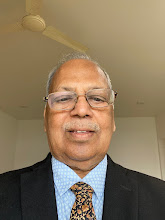
My photo
Dr. T. V. Rao is currently Chairman, TVRLS. A former professor and Board member at IIMA, Dr. Rao is the Founder President of National HRD Network and has been in the forefront of HRD movement in the country. Dr. Rao worked as a short-term consultant to UNESCO, Bangkok; USAID Indonesia; UNIDO Malaysia; and Commonwealth Secretariat, London and as HRD Consultant in India to over a hundred organizations in the public and private sectors. Dr. Rao received many awards including Ravi Matthai Fellow (AIMS), Asia Pacific HR Professional of the year 2019 (APFHRM) and Lifetime Achievement Award from Indian Academy of Management. Authored over 60 books.
Showing posts with label NHRDN. Show all posts

Sunday, December 7, 2014

3 Ps of National HRD Network

3 Ps of National HRD Network
(Address of the Inaugural session of the Hyderabad Conference on Energizing for Excellence by T. V. Rao Founder President of NHRDN)
National HRD Network itself is a good example of excellence.  Since the time it was conceptualised in 1985 February 2nd, it has come a long way. It’s first conference established standards of excellence in terms of getting papers in advance and publishing them in a book form to be distributed to delegates in the Conference and later making its knowledge available to all through a publisher; involving government officials in the conference, having a CEO conclave with one full hour given to each CEO on the first day itself (Suresh Krishna, M. V. Subbaiah, V. Krishnamurthy, M. V. Arunachalam, K. K. Nohria, Deenadyalu, eytc. Spent all day at the conference)  excellence in presentations, starting sessions on time, coverage and quality of discussions. Subsequently it has got to be known for participative management and volunteerism. Its award process latter established good standards for search, debate and selection. Its Newsletter and Journal have made a great mark. It has involved educational institutions in its conferences and various endeavours. Its leaders and office bearers were people of excellence. They also promoted excellence starting with late M. R. R. Nair and Udai Pareek and moving on to Rajesh Vidyasagar, Debashish Mitra, Arvind Pandey, Arvind Agarwal, Santrupt Misra, Dwarakanath, Aquil Busrai, N S Rajan and now Mr. S Y Siddiqui. To add to the list of presidents of excellence area various chapter presidents and their office bearers, National Secretaries, Treasurers, Board members. People bring in excellence and NHRDN symbolises in its volunteerism combined with careful selection process. For most of you who don’t know this most traditions started in NHRDN were inspired by some f the good traditions in other Institutions like the IIMA. We learnt from IIMA many things like the selection of the President, in its constitution a Society like ISABs and in its implementation involvement of alumni from XLRI and other such institutions.  People of excellence- orientation were associated from the beginning.
Currently many innovations have been started by the NHRDN and notable among them are the National Professors scheme to help teach HRD and other management practices to students of colleges that intend to offer good HR education to their students but don’t have access to National level faculty. The journal with articles prepared in semi HBR style is another remarkable thing. The webinars of the NHRDN and its portal and decentralised programs being offered by a team of full time people in the Head quarters is another innovation. Pcking up contemporary issues like the IR issues is a reality check.
However we have a long way to go. When it was set up NHRDN was set up with the following objectives:
                                i.            To help stimulate positive forces for humanizing systems and organizations in national life enabling persons working in them to make their best contribution.

                              ii.            To discover knowledge & skills relevant to HRD, its philosophy, processes, and implementation, through exploration & experimentation.

                            iii.            To generate, acquire & continuously develop new knowledge and skills related to HRD through research and development.

                            iv.            To build a storehouse of knowledge and skills in HRD with the professional rigor of science and philosophy.

                              v.            To disseminate HRD knowledge and skills among HRD professionals and practitioners, and share information and experiences relating to HRD so as to learn and benefit from each other.

                            vi.            To strengthen the HRD movement in the country by :

a)      drawing the attention of chief executives of different organizations, agencies and government departments to HRD philosophy and processes and their benefits; and
b)      Assisting organizations and agencies in designing and implementing HRD systems, evaluating the impact of HRD processes, and feeding back the results for improvement.

                          vii.            To break new grounds for the HRD movement in terms of coverage of different human systems and organizations based on national needs as well as innovative approaches and technologies.

                        viii.            To help develop professional expertise in HRD

                            ix.            To maintain standards of professional excellence in HRD

                              x.            To act as a clearing house for all referrals related to HRD activities in the country.
The future should focus on these objectives needing attention. The most important areas that need attention in the Nations’ development are the following sectors:
1.       Education
2.       Health
3.       Infrastructure including Social Infrastructure
4.       Government
5.       Society at large
To give an illustration there are over a million schools in the country and six million teachers teaching and preparing future citizens of the nation. The quality is far from excellence. If out of the ten thousand and odd HRD managers we have if everyone takes up one school to promote excellence. If every manager takes up one school we can cover 1% of the schools and if every HR manger inspires another 1o managers in his company we can cover 10% of the schools and if we expand and become tenfold in NHRDN and create HRD Networks to include line managers we can cover all schools and transform the nation. NHRDN by collaborating with NIPM, ISTD, AIMA, LMAs and their professional bodies and management schools can become a game changer in building excellence in our education systems.
T he Government of India is looking for expertise on various areas: PMS, Competency mapping, leadership Development etc. Two conferences were held with the assistance of UNDP by the DOPT. The Administrative reforms commission has suggested many innovations. One of them includes competency mapping. The government is groping in the dark and searching for light. Unfortunately sometimes they think the light is there only in the west and in MNCs not realising the Indians are different and Indian mind is complex. And MNC consultants can only transplant western systems which may have a lot of merit but fail in India as they need implementation sensitivity. We have to find our own innovations.  
HR Managers have to learn, take charge become less outsourcing and consultant dependent. I never understood why a HR Manager needs a consulting from to conduct competency mapping or assessment centres. They were all evolved with internal teams. What they need is to train the internal change agents or trainers. We need to learn to do our job than to appoint consultants to our job. We need to guide the youngsters to do more important jobs than outsourceable jobs.
The need of the hour is to redefine HRD by going beyond systems and making them broad based. The three Cs of HRD are still valid for any of the above sectors: Competency building, Commitment building and Culture building.
We need HRD Missionaries.
We need every HR professional to ask the question not what the HRD Network is doing for me but what can I do to HRD in the country and how can I be of use to the country through NHRDN?
In a recent article titled “Why We Hate HR? Keith Haymmonds pointed out the following reasons:
1. HR people aren’t the brightest lot while the function requires bright people with business acumen. The best and the brightest don’t go to HR. HR doesn’t tend to hire a lot of independent thinkers or people who stand up as moral compasses. HR people may not even know answers to basic questions like: who is their company’s core customer? What challenges do they face? Who are the competitors? What do they do well and what they don’t? Who are we? What do they do well and not so well in their own company in relation to competitors and customers?
2. HR pursues efficiency in lieu of value. They are more activity and target driven than out- come and value driven.  HR people can readily provide the number they hired, the percentage of performance evaluations they completed, the extent to which employees are satisfied with their benefits, and the number of man-hours of training imparted etc. They rarely link any of these with business performance.
3. HR is not working for the employees but often to protect the organization against their own employees by ensuring that data are collected to help organization meet labour regulations and standards.  HR people pursue uniform policies against people who are heterogeneous and complex. HR departments’ bench-mark salaries department-by-department or function-by-function and job-by-job against industry standards, keeping pay -- even that of stars-- within a narrow band determined by competitors. They are un-willing to acknowledge accomplishments that merit more than 4% companywide increase and bounce performance appraisals back to managers.
4.  HR people do not get the ear of the top management for strategic issues. Whenever they bring strategic issues they are ignored and are used for hiring, firing, organizing picnics, celebrations, etc. According to one survey a number of organizations are likely to expand their outsourcing of HR activities like learning and development, payroll, recruiting, health, welfare and global mobility.
The article concluded: “the problem, if you‘re an HR person is this: The tasks companies are outsourcing—the administrative—tend to be what you’re good at. And what is left isn’t exactly your strong suit.” 

In a recent survey by TVRLS, line managers from different organizations assessed the effectiveness of the HRD function. The survey results when compared with a similar survey results done in 1991 indicated a definite decline in the effective performance of various roles. This study indicated a definite decline in the perceptions of the effectiveness with which the various HRD functions are being performed as perceived by the line managers. There was a definite decline in the effectiveness with which the HRD roles are being performed as compared to a decade and a half ago. The study concluded that, this is perhaps an indication of the raising expectation of line managers from the HRD managers as well as a reflection of the falling standards of performance of various HR Development activities. Monitoring HRD implementation and conducting Human process research are the two poorly performed functions across most organizations.  Creating a development motivation among line managers by organizing visits to other organizations for them was one of the least attended activities. OD and self renewal activities were also among the least effectively performed activities.  The study concluded that:  1. HRD Managers need to recognize the stake holder expectations and understand the overall business and strategic context of their function. As the expectations from HRD function are changing and they are expected to perform more value adding functions and activities. 2. The HRD function should focus on intellectual capital generation activities and at the same time ensure a good ROI on training and other interventions rather than merely facilitating in-house training activities. 3. The HRD practitioners need to equip themselves with capacity and competencies needed to build the HRD function as hands on, proactive strategic partner with practical contributions to organizational goals and performance effectiveness. 4. The HRD practitioners need to strengthen their partnership and credibility with their stake holders by involving them in policy making and communicating constantly.


Just returned from the 16th National Conference of NHRDN organised by Hyderabad chapter. The Chapter has done a wonderful job. Kudos to Ravi Kanth Reddy and his team. I sat through many sessions and most of them were very educative. The four papers I got to judge from young thought leaders are impressive. Four of them and their work is reassuring that there are HRD Missionaries at work. I only wish many more do such work and more importantly disseminate the same. I was told that nine students of Balaji group of Institutions have been camping there for the last six weeks. I suggested to them that they should document their experiences and make a report or a small book. They promised to do it. If they do they will get small gift. The book should be useful to other students and future conferences. The book could highlight so many learning’s they may have had. The talk by Miss Universe India was very provocative on CSR. The National President and almost all the past Presidents post 2000 (except Santrupt) were there (Arvind, Dwarkanath, Aquil, N S Rajan). Wish Debashish, Rajesh Vidya Sagar and Arvind Pande (presidents between 1994 and 2000) were also there. Wish PVR also made it.  I was longing to see all the Journals published by him stacked at the NHRDN stall, and all the newsletters so ably brought put by Satya during his time. I am sure Kolkata will make up for what we missed. The NHRDN stall must be made very impressive and should have the collection of all the books and publications of NHRDN and AHRD. Udai Pareek and MRR may be rejoicing the body they have laid such good foundations in early years. Thanks Ravi Kanth and Thanks Nathan and the Hyderabad team. The National President, other office bearers and the Secretariat team have added a lot by their way exemplary conduct giving opportunity to all others and remaining in the background all the time to support. I am putting in a blog most of what I said in the inaugural session and some of the things I wanted to say but could not say. People Matters daily newsletter was impressive. Wish it could be sent to all members who missed the conference.

Friday, February 28, 2014

NHRDN Way Forward: Views from Founder President

National HRD Network: Way Forward

Note to President, NHRDN, June 27, 2013


1. NHRDN needs to play a more important role in National matters including Health, Education, Government and Development. The mission will be "to help all agencies, Govt. Departments, Ministries and others that matter in development to recognise and harness human potential for development". At national level many things become HR concerns. One issue for example is how do we help people to learn from the past, learn from each other and learn to help and contribute to each others' growth. NHRDN can develop an agenda for National development and help implement the same. It is in its original charter. In fact Academy was set up to promote HRD work in "not for profit" sectors but unfortunately due to its nature of funding it has not been able to move in that direction and whatever little they built in its early stages was lost subsequently. For example they returned Rs 25 lakhs about ten years ago, to a German Foundation due to their inability to pursue NGO work which was done well between 1994 and 97. They used to publish a journal called Renewal for NGOs which was stopped due to lack of enthusiasm among AHRD staff. NHRDN had in its first conference with a significant representation from Government. For example a number of secretaries from Gandhinagar came for the 1987 conference and the momentum was never taken up to be promoted latter. I am happy to see some interest in Eastern region now and their eagerness to work with MHRD etc. need to be taken seriously and promoted. 

2. Corporate sector can take care of itself.  NHRDN should contribute where it is needed and the country needs it. Having said this I don't mean to say that we should leave corporate sector. We should be agents of HR Transformation than event management body. There are a large number of Networks today thanks to Internet. When there were no networks knowledge flew through NHRDN. Now thee are many, NHRDN should enable all of them in the right direction to smoothen the flow and make it contemporary. NHRDN should become a network of networks. This needs lot of hard work. With the contacts of various past-Presidents and the current one staying in Mumbai and Delhi they can  do a lot in this direction. 

3. Chapters are active at different levels. Some go dead for some time and get resurrected again after a log gap. This should not happen. Can we put in place a mechanism of evaluating the performance of office bearers of all NHRDN chapters - six monthly and send them feedback. A 360 tool may be devised- a simple 10 item scale and data collected every six months and passed on. If and when an office bearer cannot spend time or does not present him/her self at least once in three months and cannot devote reasonable time, he or she should voluntarily step  aside or the 360 Degree feedback should help him/her to take such decisions. Any chapter which does not meet for six months should automatically be made to re-elect new office bearers and start functioning. The chapters should pass such resolutions. The Regional Presidents should visit each of their chapters at least twice in year and interact with them and share and inspire them.  

4. The NHRDN is a Registered Society (1860 Societies  Act) and Trust (under Bombay Public Trust Act 1950). It should follow what is laid down under the Act. NHRDN has been doing this well I assume. The appointment of new office bearers need to be intimated to Charities Commissioner and Registrar of Societies in Ahmedabad as soon as possible and the new Trustees list should be given to them (President, Secretary, treasurer and other elected members of the Society.) In the past there has been some ambiguity on this. The Board should appoint clearly six or seven trustees from among the new Board and inform the same to the Charities Commissioner. The conduct of the body should be both in letter and spirit  and should abide by the constitution. 

5. The expenditure of NHRDN on itself should not be more than certain percentage. Normally for NGOs we say that they should not spend more than 20% of their earnings on themselves and 80% should be spent for the beneficiaries (members and the society at large). This 20% at best can become 30% but the moment it becomes more questions of NHRDN serving its employees rather than members gets raised. We did this in early stages by not having more than a couple of employees and paying them very conservatively. Now I am not sure. The NHRDN headquarters had a lot of volunteers. Satyanarayan was a great example. He would even travel by bus to save money for NHRDN. Now there are many paid employees. It creates its own dynamics. There is a likelihood of some problems from Govt. with drawing tax concessions to a NGO when they see the corporate salary structure of  its  employees and the amount they spend on themselves. Particularly if it is more than what is paid to civil servants in Government of India, there is great threat. I like to warn the NHRDN about this impending danger to NHRDN. NHRDN is not like CII. The Ahmedabad Management Association is a  great role model. It is registered in Ahmedabad as both trust and Society by Dr Vikram Sarabahi.

5. NHRDN should not become an event management body but should become a body that lifts up the standards of HR education in the country. There are not enough interventions made by NHRDN to this direction. It needs to activate its own body like AHRD and collaborators like MDI, IIM Ranchi and other Institutions with which NHRDN has MOUs. It should enter into more MOUs and assign successful HR role models as mentors to these institutions. The National Professor scheme has not taken off. It can do wonders.

6. NHRDN had a large number of Academician associated with it from the beginning. In recent times it has tremendously gone down. Hope you can take this up as one of the missions. It will do mutually some good. Particularly all IIMs, IITs and prominent Institutions should be involved.

7. We have deliberately kept ourselves away from themes like Industrial Relations as they are directly under the domain of NIPM. Whenever we entered into those areas it is with a HRD philosophy. For example during MRR Nair's time we had focussed the entire conference on HRD for workmen and involved IR leaders. The AHRD also conducted a workshop on HRD for IR leaders and people like Prof. N. R. Sheth lead the discussions. The  Interview by Udai Pareek and me on the HRD we dreamt may give some more thoughts.

Thursday, May 10, 2012

Behind the Scenes: Building of National HRD Network


Behind the Scenes: Building of NHRDN (1985-1990)
(M R R Nair Memorial article remembering his contributions to building of the National HRD Network)
T V Rao
Institutions including professional bodies are not built over night. A number of events happen and a number of people contribute. This is a short narration of various events from my memory and the documentation in the HRD Newsletter published in those years.
National HRD Network was registered on 6th December 1986 as Charitable Trust and as Registered Society under Bombay Societies Act. . The first National Conference was held from 10th to 13th September, 1987 at Madras Taj Coromandel Hotel. The second Conference was held subsequently at New Delhi in 1989. The idea of starting a HRD Network was conceived on March 2nd, 1985 in Mumbai.  What was happening in the 20 months since the conception till the registration and the two and half years between the conception and first formal Conference that set many new traditions and established NHRDN as a new Professional body that means business and is setting up bench mark able traditions? The following anecdotal narrations may help reconstruct the behind the scene activity that went on.
A lot of things happened to make the Network take birth and get nurtured in early childhood. Some remarkable things that happened during this time are being recounted here. The inputs are largely taken from the documentation in the HRD Newsletter and the memory of the author.
XLRI Centre for HRD and IIMA has facilitated this in a number of ways. The HRD Newsletter of CHRD XLRI was the main vehicle that was used to popularise the NHRDN. Interestingly many issues of this newsletter were brought out from Ahmedabad where Fr. Abraham was staying to complete his Ph. D. With Gujarat University and as a student registered from IIMA. The first newsletter of CHRD (XLRI) was brought out in April 1985 with Fr Abraham as editor. Both Fr. Abraham and Dr. Rao used to go to the press on a two wheeler to get the newsletter out. Fr. Abraham spent a week at L&T to get Dr Pereira to complete his HRD Profile article. The first Newsletter was sponsored by L&T (out of the savings from the Mumbai conference that gave birth to NHRDN). Sponsorship of the newsletter meant paying the printing and mailing costs to 2000 receivers which was Rs 5,000. Per issue form the second issue on wards it raised to Rs 10,000. Each issue was to be sponsored by an industry that are doing some good work in HRD and as a part of the sponsorship they are to give a profile article highlighting their HRD practices. Besides L&T, the first few sponsors include State bank of Patiala, Hindustan Petroleum, MMTC, and Sundaram Clayton.  All the corporations that sponsored were those with whom Dr. Rao was working s a HRD consultant (except MMTC).
The second Newsletter of August 1985 was sponsored by State ban of Patiala. The second issue gave the following news item on the HRD Network.
“One of the important ideas that came out of this National seminar was to set up a network of HRD professionals all over the country. Many participants volunteered to be contact persons in various cities.
1.       Madras: S. Chandrasekhar (L&T ECC) and P V R Murthy ( Sundaram Clayton)
2.       Delhi: S. Raghavan (Maruti Udyog) and P K sarangi (IOC)
3.       Bangalore: K Prasannam (Ind-Suzuki Motor Cycles) and K. S Rao (Madura Coats0
4.       Baroda: Dr Rajen Gupta ( Jyoti Ltd) and Saurabh Dixit (Petrofils)
5.       Bombay: T. P Raman (SBI) and D F Pereira (L&T)

The editorial of the February, 1986 issue of HRD Newsletter sponsored by Sundaram Clayton mentions the following:
“As another step towards realising our country’s goal, a national HRD Network has been formed under the convenorship of Dr T V Rao. It is a network of HRD professionals committed to promote HRD movement and spread HRD philosophy in the country. With the help of regional coordinators, it is already enrolling members and setting about a concrete plan of action”... Any of the readers who want to become a member is welcome. Please fill up the enclosed form and send it to T V Rao at IIMA with a copy to Centre for HRD XLRI.
·         A Four day residential program on “designing and Implementing Performance appraisal systems” was announced to be held from April 23-26 at Madras Adayar Park Hotel organised by the National HRD Network. S Chandraselhar coordinated the workshop.
This newsletter also gives details of the Network and announces the HRD Newsletter as the media of communication among the members of the Network. One of the objectives of HRD Network envisaged is to draw the attention of CEOs, agencies and Government departments to HRD philosophy, Processes and resulting benefits.
The fourth Newsletter of August 1986 sponsored mentions the following at about NHRDN:
“NHRDN has come up a long way and since its inception. The process is on to register the Network formally and enrols institutional and individual members.  From this issue onwards members will be charged”. The Newsletter also gave the following news items:
·         The Southern Regional HRD Network was inaugurated by Udai Pareek in a meeting organised by Madras Management association and the NHRN.  S Chandrasekhar Convenor of the NHRDN, Dr K M Thiagarajan, President of MMA, Dr T V Rao National Convener were present (as appeared in Indian Express and Hindu 19-4-86 and 30-4-86)
·         The first joint meeting of Ahmedabad and Baroda chapters was organised the Bank of Baroda staff college Ahmedabad on 5th April 1986 attended by 24 participants. A Meeting was hosted by Anil Khandelwal senior core faculty of BOB Staff College. KK Verma and G K Ghosh agreed to host subsequent workshops.
·         The Bombay chapter had their first meeting on 15-3-1986 at SBI central office and 11 members were present. The network discussed modalities and decides to work closely with other professional bodies.
·         The PAS workshop held at madras was attended by 27 participants and faculty included T V Rao, Udai Pareek, Keith D’Souza, Fr Abraham C M Srivastava and S Chandrasekhar.
·         The seminar papers recent experiences of HRD were published by oxford and IBH in 1986 448 pages and Rs 95.
The fifth Newsletter sponsored by MMTC mentions the following:
·         A two day workshop on team Building skills was organised by ISTD Madras chapter and NHRDN Southern region. 21 participants form 17 organisations participated. S Chandrasekhar of L&T organised the workshop and shared his experiences with NTL. T Madhavan Kutty Director Best and Crompton inaugurated the workshop
·         Rajan Johri has taken lead as convenor of Baroda chapter and has held seven meetings in 1986. The memorandum of association was circulated among the members for their comments and suggestions.
This Newsletter also announced the four days National Conference of NHRDN at Hotel Taj, Madras 10-13 September. Fee Rs 1500 for non members and Rs 1200 for members. S Chandrasekhar is the Organising committee chair and KK Verma the program committee and H N Arora the Souvenir Committee. Annual membership fixed at Rs 100 Life Rs 1000. Institutional at Rs 1000 and 10,000 respectively annual and life.
Services offered re: HRD Newsletter, Chapter meetings and workshops, Conferences, Research Publications, and seminars and program workshops.
 Chapters are formed already in Ahmedabad, Bombay, Baroda, Calcutta, Delhi, Bangalore, Hyderabad, Visakhapatnam, Madurai and Madras.
·         E Abraham: Secretary
·         T V Rao: President
·         S Chandrashekar Madras and Southern region
·         R K Chopra: Calcutta
·         Rajan Johri : Baroda
·         Anil Khandelwal : Ahmedabad (Treasurer and Ahmedabad Chapter)
·         T Padhmanabhan : Delhi Chapter (P K Sarangi did not take charge later Anil Sachdev joined)
·         T P Raman:  Bombay chapter
·         K s Rao:  Bangalore chapter N Kantha Rao Hyderabad Chapter
·         Y R Reddy:  Visakhapatnam chapter Sudarshan Sundaram Madurai chapter.
·         Other Executive members are : G K Ghosh , D M Pestonjee, J K Parikh, Kakoli Saha, KK Verma
April 87 issue has the
Announced the conference once again, and mentions the following:
“The National HRD Network is taking shape and the chapters are becoming active and well defined. News items of chapters testify this.
“NHRD jointly with ISABS announces a six day residential program on “HRD Facilitators Laboratory” June 8-13 at Clarks Amer Jaipur. Faculty : Uma Jain, Rajen Gupta, S Chandrasekhar, C M Srivastava, T V Rao and others”. Rs 4000 fee.
Salient news items:
1.       Ahmedabad chapter members meet International experts in HRD and OD: Dr Robert Brown, Rolf Lynton, Robert T Golembwisky, and Udai Pareek.
2.       Baroda organises a two day program on Basics of HRD jointly with ISTD Baroda and BMA.
3.        R K Sharma of BOB elected as new President in place of Rajan who was going to join NIIT
4.       The second meeting go f Bombay chapter was held with 25 members present at SBI. Fr Abraham was also present.
5.       HRD Chapter of Hyderabad was inaugurated on 6th December 1986 at SBI Staff College. Dr T V Rao addressed the gathering of 22 members. V N Kantha RAO as President organised the same.
6.       Visakhapatnam chapter was inaugurated on 26t January 1987. Y R Reddy as President organised the same.
7.       The first meeting of the Madras chapter and Southern region was held at Hotel Connemara on 14th December 1986. Dr Somnath Chattopadhya and M Swaminathan IAS were special invitees. Besides Mr S Chandrasekhar, PVR Murthy (secretary), N C Sridharan (Assistant Secy) and B Kalyanaraman (Treasurer) were present.
The October 1987 issues a conference special and lists the members of NHRDN. The issue sponsored by Indian Organic Chemicals. This issue presents the first annual report of NHRDN.
The First National Conference on “Alternatives and Strategies and Approaches of Human Resources Development”. This conference established many new land marks.
1.       For the first time the Conference papers were distributed on the first day of the Conference in a Book form. The book was edited jointly by T V Rao, E Abraham, K K Verma and Anil Khandelwal. All of them sued to work at Ahmedabad from BOB Staff College.  Most of the other professional bodies were circulating only Xeroxed or cyclostyled papers. The source of inspiration for this is the International Conference held at IIMA where at a cost with which 500 copies could have been printed 200 copies were Xeroxed and circulated. When this issue came up for discussion in a Committee in IIMA,  T V Rao decided that HRD Network conference papers will be printed and given on the first day of the conference.
2.       A CEO Conclave where 10 top level owners, Chairman and MDs of corporations presented their views and approaches to HRD. These included M V Arunachalam, M V Subbaiah, Suresh Krishna, Deenadayalu of MRL, Kalyanasundaram of SBI, K K Nohria of Crompton Greaves, and Dr V Krishnamurthy of SAIL etc.  Every single CEO listed in the brochure came for the conference and presented their approaches.  Chandrasekhar got the CEO conclave videotaped. We sent the tapes to XLRI but got lost somewhere. Hope someday someone will find them as  good memories.
3.       Economic Times brought out a special supplement of two full pages and this was coordinated by T V Rao
4.       Every session started on time and closed on time
5.       An evening entertainment in Bharat Natyam was organised by MMs. Krishnaswamy Associates
6.       Participation was high around 200 delegates and no parallel sessions to the extent I recollect.
7.       The discussions and presentation were of high quality. It was four full days of Conference
8.       There were sessions on HRD in Government and many IAS officers especially from Gujarat came for the conference.
9.       Academicians were not charged the conference fee but were invited and were put up in company guest houses. NHRDN made it a point not spend any money on the travel of any office bearer or academic or professionals  invited for the conference. They were to meet their own travel and stay, even if they are invited to speak.
10.   NHRD saved from the delegate fee every single pie that came from sponsorship and built its corpus.
S Chandrasekhar managed the organisation for the conference assisted by Mr. Mukundan and P V R Murthy and other teams from L&T and Sundaram Clayton etc.  The last day lunch was sponsored by SAIL. Mr. M R R Nair was sitting through all the sessions including the AGM. On the last day in the AGM one of the delegates (Meenakshi Khasliwal Nair) remarked that the conference was somewhat elitist as it discussed only HRD of Executives and no where workers and their concerns figured out. She asked if we mean by HRD only HRD for Executives.  In response to this that day in  the AGM it was decide that the next conference will focus on workers and their concerns.  Behind the scenes M R  R Nair agreed to host the next conference in Delhi. Credit goes to him for organising a well attended conference in 1989 at Delhi where Union Leaders, Practitioners and professionals were involved. This conference also got all the luminaries from Academic institutions on one platform.  
Subsequently M R R became the second President of NHRDN. It was at this time CII offered to house NHRDN secretariat in its newly constructed building in Delhi. As SAIL has already offered its office for the NHRDN and even appointed Mr. Rakesh Kumar to look after the NHRDN as joint Secretary for convenience it was decided to keep it with SAIL. It moved into 12 Cosmoville only during the time of Dr Udai Pareek who bought the  house and got the registered office changed from IIMA to 12 Cosmovillle. Arvind Agarwal who was with Modi Xerox at that time was the Treasurer of NHRDN. In fact during this time a plot of land was attempted to be taken from Haryana Urban development Authority to the extent I recollect in Gurgaon but later had to be sold in order to procure the 12 Cosmoville as the Gurgaon was not developing.  If any one had slightest idea of the future of Gurgaon, we would not have withdrawn our membership. MR R provided all the facilities needed for NHRDN to grow. He added stature to the body as he was Director in SAIL and was highly respected for his competence. He also had high respect for academics and used their services to build NHRDN.  He got a large number of National level union Leaders involved to speak on HRD. He was on the Board of XLRI subsequently. After AHRD was started he became the first Chairman of AHRD. The AHRD Board passed a resolution to collaborate with XLRI for the Doctoral Program. It has to be passed also by the XLRI Board. Fr. Abraham was not sure if all members in XLRI Board will agree to collaborate with this unknown entity called AHRD. M R R Nair specially flew to XLRI to get this approved. We can’t forget the amount of time he spent for NHRDN and later for AHRD. I think these are the people who have set themselves as role models for other professionals in terms of their commitment. 
It was in this conference on the workmen it was decide that it is high time we focus on what kind of HRD Managers we should have given the alternative approaches discussed in the first conference and the need for managing workmen with various HRD interventions discussed in the second conference. It was then decided to hold a National Seminar on the Role of HRD Managers and the Competencies required to be a good HRD manager. We had to fall back again on Madras to do this. There were already good group of young XLRI graduates working in Madras and Sambamurthy who worked as HRD Manager in State Bank of India and alter joined Sundram Fasteners was chosen to coordinate the conference. M R R Nair and I were set out to bring out a book with the views of CEOs, Union Leaders, Professionals, and academics to highlight the competencies of HRD Managers. Excellence through HRD was the book as a result of this. To facilitate this seminar I also completed my book on HRD Missionary. The two books were distributed and contents deliberated in the National Seminar. This Seminar began with a one full day Vision-Mission workshop attended by all Chapter Presidents and office bearers of the NHRDN in Taj Coramandal hotel It was facilitated y Anil Sachdev and V S Mahesh. That is where ht idea of starting the Academic Centre to facilitate research in education and also work in disseminating HRD for Government and NGO sectors was visualised. This is  what was alter named by the three Presidents of NHRDN and the Secretaries as Academy of HRD. It was also in this National Seminar it was decide that HRD has come of age and we should focus the next Conference on International views. Thus Dharni Sinha and B L Maheshwari were requested to host the conference in Hyderabad as they had a lot of International contacts.
This the tradition of deciding the theme of conference in the previous conference was established and all the tradition of preparing a book of all presentations and distributing on the first day of the conference, starting every session on time and closing on time was established.

What contributed to Building a Strong NHRDN?
If someone asks me what facilitated laying such strong Foundations for NHRDN I would say various factors:
1.       Institutions like IIMA and XLRI without doubt. They have given us the freedom to do what we did and encouraged us to build institutions
2.       Committed people like Fr Abraham, Udai Pareek, M R R Nair,  Chandrasekhar, K K Verma, Khandelwal, PVR Murthy, K S Rao, Sambamurthy, M R R Nair, Arvind Agarwal, P K Sarangi, Mrs. Khanna (Delhi Chapter President for some time), Anil Sachdev; and many others.
3.       Support of Industry like L&T, SAIL, Crompton Greaves, Sundaram Clayton, EID Parry, State Bank of India, Bank of Baroda, Modi Xerox, Indian Oil etc. Several organisations used to sponsor lunch and dinner for the conferences and we made it a point to save equal amount from the delegate fee.
4.       Supportive academics like Dharni Sinha, Udai Pareek, B L Maheshwari, Anil Sachdev, V S Mahesh, D M Pestonjee, Keith D’Souza,
5.       Many silent supporters to NHRD like Arvind Pande (SAIL Chairman), K K Nohria, Suresh Krishna, M V Subbaiah, N Vaghul, T Shanmugam (SBI), T P Raman, C M Srivastava, N. R. Sheth of IIMA, Fr. Romuald D’Souza,  Ishwar Dayal, V Krishnamurthy, Pradip Khandwalla, D M Pestonjee, Rakesh Kumar, and several of those who signed the MOU and were with us all the time; Satyanarayana, YRK Reddy, Rajesh Vidyasagar, R R Nair, Rupande Padki etc. many more.   
6.       Other professional bodies like the Ahmedabad Management Association, ISABS, ISTD chapters, Madras Management Association, NIPM, AIMA etc. t collaborate in various seminars
7.       Every single President had something to contribute. Every single President.  They gave their name organisational support and time.

This narration is mainly for the first five years though it has touched a few years beyond. The remarkable turnaround in NHRDN has occurred from 2000 onwards. We had difficult time in between as many chapters were not functioning well and there were ups and downs. Some of the Presidents used to get elected and after the election did not find time and their other colleagues could not take initiative. However the main turnaround was after Arvind Agarwal took over. Every single President after him did a marvellous ob. GP Rao in Delhi is a major force that mobilised a large number of professionals and saw to it things would move. He used to excite people with ideas and put them to action. Santrupt took it to new heights. Good governance practices were established. Dwarakanath, Aquil and Rajan have further strengthened them and taken NHRD from orbit to orbit. PVR made the Journal of NHRDN in recent times jewel in the crown of NHRDN.
They were also helped by an excellent team of well wishers and support all the time in Delhi, Mumbai, Hyderabad, Bangalore, Madras, and Calcutta and so on. I am not mentioning their names as any few names will make it unfair for a large number of others and it is for the various Presidents to acknowledge the contributions of others. I have strong belief Institutions can never be built by a single person. They are always a collaborative work of many and sometimes a few individuals sand out for their long term involvement, emotional attachment, sustained optimism and passion. There are many in NHRDN and it is they who have built NHRDN. 
Certainly the contributions of late Udai Pareek, M R R Nair, in  many ways and those of Dharni Sinha, B L Maheshwari, D M Silveira, and Manohar Nadkarni etc. in some ways will always stand out. With gratitude I dedicate this small piece to them. May God Bless them and rejoice their presence with Him.

I may not have mentioned many names. I can imagine there will be more than a few hundreds of Professionals who have contributed to the building of this body. It is very difficult to count all the bricks. I have counted a few that I saw and experienced intensely. I may be forgiven for not putting each one here.  There are several from the East, west, north and the South.