About Me

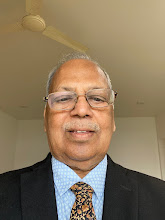
My photo
Dr. T. V. Rao is currently Chairman, TVRLS. A former professor and Board member at IIMA, Dr. Rao is the Founder President of National HRD Network and has been in the forefront of HRD movement in the country. Dr. Rao worked as a short-term consultant to UNESCO, Bangkok; USAID Indonesia; UNIDO Malaysia; and Commonwealth Secretariat, London and as HRD Consultant in India to over a hundred organizations in the public and private sectors. Dr. Rao received many awards including Ravi Matthai Fellow (AIMS), Asia Pacific HR Professional of the year 2019 (APFHRM) and Lifetime Achievement Award from Indian Academy of Management. Authored over 60 books.
Showing posts with label Indian Managers. Show all posts

Thursday, February 2, 2012

100 Managers in Action


100 Managers in Action
T. V. Rao
I have been informed by the Publisher Tata McGraw-Hill that this book is going to be out finally this week.  I am so happy and excited. After several years a book written for line Managers and all managers has come out.  At IIMA my work began with line managers only before I settled down to create HRD discipline and wrote largely for HRD folks. This and the earlier book on “Managers who make a Difference” meant for every manager in the making makes me feel good.
100 Managers in action presents case studies of a hundred managers who were chosen from among approximately 9,000 of whom we have profiled using 360 Degree feedback in the last 15 years. We got a list of nearly 300 managers who got outstanding ratings from their juniors, colleagues and seniors put together.  We wrote to almost all of them. Some of them whom we profiled in early years (10 to 15 years ago) could not be contacted as some of them either retired or changed their jobs. We were able to finally get slightly over a hundred managers. It was a task to get them to share their stories.   Once identified the role of 360 Degree Feedback is over. We don’t share any highlights from their 360 in this book but their little stories of their career, school days, early career and accomplishments in various assignments with special focus on the work they were doing around the time they got their 360 profiles made. Some of their stories and actions reveal their early exhibition of their leadership and managerial qualities. We have tried to follow our RSDQ model in presenting the stories. Wherever possible we described their managerial and leadership actions, the styles and the philosophy behind their styles, their attitudes to work, and assumption about what is success and what succeeds in India etc.  
In this study, there are 19 young managers who are 40 years and below. About 40% of the managers are in the age bracket of 40 to 50 years while another 40% are above 50 years of age. Very few are over 60. A few of the retired continue working as advisors to their organizations post retirement. The study also highlights that most of these managers are highly qualified. Also some of them are only graduates and yet reached the heights and done commendable work. The issues they answered vary from person to person but they present interesting stories.
These managers have undoubtedly made a high impact on the following dimensions:
1.      They develop and articulate a vision for their sphere of work.
2.      They are driven by technology.
3.      They have a knack of balancing both immediate goals and short-term results with the long-term goals and intellectual capital building.
4.      They are also conscious of the need for and the importance of building an appropriate organisational culture.
5.      They are good motivators and developers of people.
6.      They are also good in understanding the needs and requirements of their colleagues and internal customers.
7.      They are good team workers.
8.      They are good “Boss Managers”.
9.      They strive to understand their customers, listen to them, understand their expectations and problems, and solve their problems proactively.
10.  They have a personal philosophy of faith and belief in their juniors and consequently exhibit a developmental and empowering style.
These ten differentiating areas of impact by the managers was the starting point of this study rather than the conclusions from the study. The managers we have chosen have already demonstrated these qualities in our 360 Degree Feedback. The case studies of these managers reveal further competencies of the high impact making managers.
From all these 100 case studies we conclude the following about these managers who made impact on people around them:
1.      They are hard core Networkers
2.      They are great Learners
3.      They are achievement driven and focus on building achievement and problem solving culture
4.      They want to live many lives: These leaders want to share their own experience with others
5.      They are perseverant: They implement systems and keep coming back to them for monitoring
6.      They exhibit their Leadership skills from early years
7.      They are self motivated
8.      They are aware about self
9.      They are open to views of others and feedback

10.  They build on strengths
11.  They follow up with the outside world
12.   They get support from their families
The managers even though they belong to different industries, age groups, they have different experiences, their leadership styles are different, outlooks are different, but they all share a common pursuit for excellence. And they are relentless in this. As they rose in experience and designation, they found higher responsibilities to shoulder, thereby acquiring higher skills in the process.
Here we do not have data to support the impact these managers have created on the financial front of the company. But going by the fact of the exceptionally high ratings received in the 360 Degree Format, we would like to believe the overall impact would be significant.
This research did not begin with any hypothesis as such. There was only one objective to bring out the lesser-known people in the limelight. We accepted what came on our way. It was a nice to communicate back with the people who were once or more than once profiled by us. It was mutually beneficial. We could see the after effects of 360 Degree Format and the participants were happy to share it. They have followed a self disciplined life working religiously on the action plans made during the workshop conducted for the company. Some have also shared the accomplishment and growth with us.
In initiating this work I am greatly influenced by the book “The Extraordinary Manager” by Zenger and Folkman. They studied over 80,000 managers who had their 360 Degree Feedback and highlighted what distinguished extraordinary managers from the rest. We have now insights from Indian Managers for Leadership in India.
I thank my co-author Charu Sharma who worked relentlessly for over a year collecting the case studies. My colleagues at TVRLS Dr. Raju Rao and Ms. Nandini Chawla should have joined me as co-authors as the selection of cases is based on the work done by them also along with me. Nandini has even facilitated collection of some of the case studies from her list at TVRLS Bangalore.
The managers at the time of the case studies were employed at the following organizations: Adani Group; Aditya Birla Minacs; Aditya Birla Nuvo Ltd; Advanta India Ltd; Agvantage Agribusiness LLP; Altair; Apeejay Group; ATE Enterprises P Ltd; Bharat Electronics Ltd; Bhoruka Power Corporation Ltd; BSI Group India; Chowgule & Company P Ltd; Clariant Chemicals (I) Ltd; DCBL; Dr Reddy's Laboratories Ltd; Elitecore Technologies; Ferromatik Milacron India Ltd; Fortis Mulund Hospital; Gati Ltd; Godfrey Philips India Ltd; Idea Cellular Ltd; IL&FS; IIHMR; Intervet India P Ltd; Jindal Steel and Power Ltd.(JSPL); Jubilant Foodworks Ltd; KHS Machinery; Mamata Group; Novartis; Oracle India; Pfizer Ltd; Philips Electronics India Ltd; Reliance Power Ltd; Reserve Bank of India; Rubamin; Steel Authority of India Ltd; TCI XPS; Titan Industries Ltd.; Wockhardt ; Wyeth Ltd; and Youbroadband & Cable India.
We are sure that there are many more outstanding managers among those who had not gone through 360 Degree feedback and those who had gone through the feedback but could not be profiles for various reasons here. We hope that they will find place in our next venture of “1000 Managers in Action” a project of TVRLS.

Friday, October 14, 2011

"100 Managers who made an impact on those around them"

100 Managers who made an Impact on those around them

(Preface to the book by T. V. Rao to be published by Tata McGraw Hill, January 2012)

“My life story should be a confidence booster for every average person in the world that he or she can indeed make a difference at least in a small way to this world.”  (Narayana Murthy, Farewell speech at his last AGM, Infosys, 2011).

When I went to Harvard in 1975 to work with David McClelland to learn his work on Psychosocial Maturity, and adapt it to India, most Americans I had met, did not even know that India existed as a country.
Back in India, we all learnt about great world leaders among which, the only person that used to figure out was Mahatma Gandhi. In the next two decades, we had to bank a lot on the west for corporate leadership. Henry Ford, Lee Iacocca, Jack Welch, and many others inspired us with their corporate leadership skills. In India, we talked about the Tatas and Birlas, but one very rarely took the names of other personalities. Whenever I worked with the Public Sector Banks like the State Bank of India and with other experienced colleagues, I faced difficulties in initiating and managing a change.

At that time I often wondered that if any Harvard MBA or anyone from the West can survive to manage a small branch of any of the PSU banks beyond a couple of weeks. The Indian organisations are so complex and multidimensional that they can only be managed well by the Indian mind which is equally sophisticated and multifaceted. We in our country also load our corporations, units, branches and managers with too many expectations.

Come 1990s the situation has changed. India had learnt and continues to learn. India seems to have opened the doors of liberalisation, after facing the challenges of ‘70s and ‘80s and the opportunities of the ‘90s. What it has done is, it has produced more leaders and perhaps brought many more leaders out into the open.

India started recognising the merit of its own people and systems. Many Indians, which include management gurus, Nobel Laureates have got recognition in the US. There seemed to be a fixation for the achievers of the West until the mid ‘90s. But now things have changed. Now we see a lot has been written about Indian Leaders in the last two decades. India now has begun to recognise its own leaders. In fact, the world has started recognising Indian Leaders and their innovations. A good evidence to this is provided by some of my colleagues at the Indian Institute of Management Ahmedabad. There were many sent to Harvard in sixties and seventies to do their Doctoral studies and return back. Some of them returned, taught and remained in IIMA as professors and even retired less known to the rest of the world but perhaps remembered fondly by all the students they taught For example Professors M. N. Vora and Balakrishnan). They are the best teachers and even management thinkers most suited for India but less recognised by the rest of the world. They did not write for Harvard Business Review but preferred to write for Indian Management or Vikalpa or for the Economic Times or for Economic and Political Weekly. Contrast this with the Professors who left IIMA and preferred to make their mark in the west. They are rated as world’s best Management Gurus and got to be known much more in India than those who remained in the country to serve their country. They also brought pride to India in many ways but they got the recognition in India after the rest of the world acknowledged them (example: Dr C K Prahalad and Vijay Govindarajan both of who were my colleagues at IIMA).

The fact that India has become a happening place has been proved once again by these Management Gurus as they started visiting India more frequently, writing on India and offering their services to their country. In my view their biggest contribution to India (besides making its talent known outside) is the proof they provided that “Indians themselves do not recognise greatness in their fellow citizens until they are recognised by others outside India - ghar ka murgi dal barabar”.

India has thrown out many leaders post liberalisation as the doors for leading and talking about leadership have gone up. Known leaders in Indian corporate sector have become too well known in the recent past. Books are being written about them. Starting with the efforts of Udai Pareek in mid ‘90s when he wrote about Indian Leaders in his book “Beyond management” Followed by Preetam Singh who wrote on transformational Leaders in India, many books have appeared in recent times. NR Narayana Murthy, Kumar Mangalam Birla, Kiran Mazumdar Shah, Deepak Parekh, Verghese Kurien, Amrita Patel, Anu Aga; Azim Premzi, Kishore Biyani; L N Mittal, Nandan Nilekheni and so on a large numbers of Indian corporate leaders have emerged and studied and written about.

They have added to the literature of Indian leaders. Geeta Pirmal, S. N. Chary, Srinivasa Pandit etc. have documented the leaders and their roles. In recent times books like “Stay Hungry Stay foolish” and “Connecting the dots” by Rashmi Bansal also has begun to popularise the less known entrepreneurs.
All these leaders and entrepreneurs at one time were ordinary people but have grown. A set of circumstances have helped them to nurture their internal talent and enabled them to convert the same and now they have emerged as new era leaders. What distinguishes them is their utilization of talent and impacting others around them by their behaviour, actions, and stimulations. They made a difference by making others do a lot more than what they were doing at that point of time. They are great motivators and great impact builders.

In the corporations they lead and India has a large number of such leaders. They are known as managers and have not yet been branded as leaders. They are employees or employers, and leaders in the making. They are more known as managers. India has millions of such managers. There will be a hundred leaders for every citizen in a country like Seychelles, whose population is below 90,000. India is vast and wherever they are some of the Indian managers are leaving their mark.

This book sets out to make known to the world about a hundred of them. This is just a beginning. We are set out at TVRLS to make known thousands of Indian managers who have made an impact. A few of them, whom we are covering, have already made an impact and become CEOs and made their mark as CEOs. Others may have even retired recently without the larger world knowing about the impact they have made or are making. It is our desire to focus on them.

Indian media has a knack of picking up a few and focusing on them for long period of time. Sometimes it builds them up to and brings them down and starts focusing more on them as they come down – like Ramalinga Raju. A large number of good Indian managers and leaders are not media savvy. They have no interest in making others know about them. However it is important for the world to know that Indian corporate sector is not built by a few leaders who are well known but by many managers who are less known but have made an impact on others around them in the corporations they work..

It is said that 80% of corporate success is brought by 20% of its employees and the rest of the 80% employees, live under the glory of these 20%. I do not personally subscribe to this fully. I believe while a lot of work is done by silent few, 80% or even more contribute to it in some way or the other. However if every one of the 80% can be made like the 20% who lead the corporations and stand out as pillars of the corporation, Indian will go a lot more forward.

It is with this intention this book is being written. We needed to identify some way the hidden leaders. Leadership is often defined as the art and science of influencing others. Those who make impact on others are leaders. Making impact is a matter of time. One may make an impact at a given point of time and becomes a leader at that point of time. Sustained leadership makes you more known. Leadership therefore ahs to be cultivated, nurtured and continuously exhibited. For the purposes of this book we have chosen the tool of 360 Degree feedback to identify those who made an impact on others. If you have a group of juniors, seniors and colleagues assessing you on how well your are performing various roles, and they all rate you as excellent, then one has made an impact. So many people can’t simply say that you are doing a good job unless you have really done so. This means you have made a visible impact.

Using this criteria we have identified about 200 managers from our data base of over 8000 managers whose 360 Degree feedback profiles are available. Each one of them is assessed anonymously by at last ten. We combined their scores on all items and identified top scorers from several industries. Many of them did not respond positively to our request. We could not locate some of them. Organizations like the Aditya Birla Group with whom we did a large number of 360 sessions had a good number who retired as they were profiled almost a decade ago and perhaps many of them were in their late fifties at that time itself. We could finally complete our first hundred cases and present their histories here.

This book is not about 360 Degree feedback. This book presents short case studies of those who made impact on people around them. 360 Feedback is used as the main criteria to assess the impact made on others and identify cases. We also don’t wish to say the remaining managers who have not covered from the 8000 data base have not made an impact. We believe that every manager makes an impact- some impact or the other in the way he or she manages people, various tasks and activities. Some of them who have made a higher impact and uniform impact are what are included. The cut off point is also not fully scientific. We did come across organizations that have a culture of giving liberal ratings though we find that in general most organizations have similar high and low scores and similar averages. Where such obvious cases were found we had to restrict our selection to include only those about whom we were convinced as genuine impact makers. In some cases when we contacted them to make a case study, the managers were too shy to be studied. They wanted to take their organization’s permission. We did not pursue such cases beyond a point as this is not study of their organization but a documentation of their career and life story and their accomplishments from early years.

If we take a peep into the life history of most well known leaders mentioned above, I am reasonably certain they have all passed through at some time in their early career a stage that these 100 managers are in. A few of the managers covered in this book are already well established leaders and have begun to come to public attention.

We hope this book serves the purpose of providing inspiration to many young managers that there are phenomenal opportunities today in India to make an impact and make a difference.

Like Mr. N. R. Narayana Murthy desired in his Farewell speech at his last AGM that his own life story be a source of inspiration for average person, we hope the stories in this book also will be source of inspiration for other managers that they can also be leaders by doing small things and thinking differently and making a difference.

T V Rao

Related Quotes I use in  Leadership Sessions

“There are many Narayana Murthys and C K Prahlads among us. We need to recognise them and respect them .”

“The 100 Managers book brings out the stories of leaders in the making who are working silently and have been making an impact at least on people around them”.

My next work is on a “Thousand managers” to bring into open a thousand honest and impact making managers from among the millions we have.

“All great people at one point of time or the other are ordinary people. It is their hard work, character, integrity, commitment, perseverance and thinking and doing things ahead of others that made them great leaders. They had a set of circumstances that came their way and helped them to become popular figures. Some of them created such circumstances y their own hard work and talent and when the circumstances have happened as a result of their hard work, they made a mark. Others always kept themselves ready to make use of such circumstances whenever they occurred. The lesson is – Leadership is partly a matter of chance and you need to work hard and be ready all the time to make use of it -the chance factor- when it occurs".

We should not fall into the trap of recognising our own valued people after they are recognised elsewhere.

The tragedy with us in our country is that we have fall low on our self respect. This happens because we are taught from early childhood to differentiate in terms of caste, community, religion, language, state, colour, size sex etc. This differentiation puts each one of us at a lower level than some others at some time or the other and in relation to some parameter or the other. This results in inferiority and insecurity. We have a tendency to look at what we don’t have in relation to others rather than what we have. This further adds to our insecurity. As a result we are not able to see our positives and what we have or what we possess. This in security leads in turn to inability to appreciate the contributions of others. Unconsciously we adopt what is often called as crab mentality. As a result our great people get recognised only when they are put in societies who are more secure and who are recognising our talent. It is high time we recognise the talent in ourselves and among each other. It is high time we learn to appreciate each other’s contributions. Then we are in for a greater India.

This book is a small attempt to bring out the stories of talented managers and hidden leaders as revealed through the assessments of people around them. Not all may have done great things yet that move them towards public recognition. They certainly have made smaller impacts in their own way.

We also plan to document the stories of “100 Professors who made a difference” and the move on to “100 Lawyers who are different”, “100 Social workers who made a difference”, “A 100 Bankers who made a difference” etc. The intention is to multiply the numbers of people with Character combined with other leadership qualities and document their stories. Their stories may not be filled with heroic works but they definitely are people who deserve to be noticed. If you know of any ordinary person who is doing good things and making an impact on others, please let us know so that we can make their stories known.


T V Rao